Understanding Mango Ripening During Transit (What Buyers Should Know)

Introduction

One of the biggest surprises for new mango importers is this: mangoes don’t arrive exactly as they were when they were shipped.

Even after harvest and packing, mangoes continue to change during transit. They slowly ripen, soften, develop aroma, and eventually reach eating condition depending on how they were handled along the way.

This natural process is called post-harvest ripening, and it is one of the most important factors in international mango trade.

If you understand how mango ripening works during transit, you can make better buying decisions, reduce losses, and ensure that your customers receive fruit at the right stage of maturity.

\ Manago blog 1
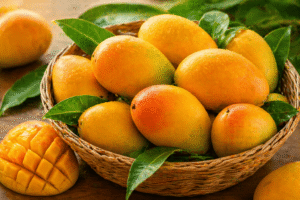
Why Mangoes Keep Ripening After Harvest

Mangoes Are Climacteric Fruits

Mangoes belong to a group of fruits that continue ripening even after being picked from the tree.

This means:

  • Ripening does not stop after harvest
  • Internal chemical changes continue
  • Taste, color, and texture evolve over time

Natural Ethylene Production

After harvest, mangoes produce a natural gas called ethylene.

Ethylene is responsible for:

  • Softening of fruit
  • Sweetness development
  • Aroma formation

The more ethylene produced, the faster the mango ripens.

 Key Stages of Mango Ripening During Transit

Stage 1 – Harvest Maturity (Pre-Climacteric Stage)

At harvest, export mangoes are usually picked at a mature but unripe stage.

At this point:

  • Fruit is firm
  • Sugar level is developing
  • No strong aroma yet

This stage is ideal for shipping.

Stage 2 – Early Transit Phase

After packing and cooling, mangoes enter controlled transit.

During this phase:

  • Ripening is slowed down
  • Temperature control is critical
  • Ethylene production is minimal

This is where cold chain plays a major role.

Stage 3 – Mid Transit Ripening Activation

If temperature is slightly higher or transit is longer:

  • Ethylene production increases
  • Softening begins slowly
  • Aroma starts developing

At this stage, mangoes are transitioning from firm to semi-ripe.

Stage 4 – Pre-Arrival Ripening Stage

Just before reaching destination:

  • Mangoes become softer
  • Color changes become visible
  • Sweetness is more developed

Proper timing ensures mangoes arrive at retail-ready condition.

 Factors That Affect Mango Ripening During Transit

  1. Temperature Control (Most Important Factor)

Temperature directly controls ripening speed.

  • Low temperature → slow ripening
  • High temperature → fast ripening

Ideal shipping temperature usually ranges around 12°C–13°C depending on variety.

  1. Duration of Transit

The longer mangoes stay in transit:

  • The more they ripen
  • The shorter shelf life becomes after arrival

Air freight = faster arrival, slower ripening impact
Sea freight = longer time, higher ripening control needed

  1. Variety of Mango

Different varieties ripen differently:

  • Chaunsa: slower, balanced ripening
  • Sindhri: faster ripening, more sensitive
  • Anwar Ratol: highly aromatic, ripens quickly

Understanding variety behavior is critical for importers.

  1. Handling and Physical Damage

Bruised mangoes ripen faster due to stress.

Damage causes:

  • Increased ethylene production
  • Faster softening
  • Reduced shelf life

Even small handling mistakes can affect entire cartons.

  1. Pre-Cooling Quality

If mangoes are not properly pre-cooled:

  • Heat remains trapped inside fruit
  • Ripening accelerates during transit

Pre-cooling is one of the most important steps before shipment.

 Air Freight vs Sea Freight Ripening Differences

Air Freight (Faster, Controlled Ripening)

  • Transit time: 1–5 days
  • Better control over ripening stage
  • Ideal for premium markets

Mangoes arrive closer to fresh condition and ripen at destination.

Sea Freight (Slower, Longer Ripening Cycle)

  • Transit time: 10–25 days
  • Requires strict cold chain
  • Ripening must be carefully managed

Even small temperature changes can affect final quality.

 What Happens If Ripening Is Not Controlled Properly

Early Over-Ripening

If mangoes ripen too early:

  • Soft fruit on arrival
  • Poor shelf display
  • High rejection rates

Under-Ripening

If ripening is too slow:

  • Hard fruit on arrival
  • Customer dissatisfaction
  • Delayed sales

Uneven Ripening in Cartons

This is a major issue for importers.

Some mangoes may be:

  • Fully ripe
  • Semi-ripe
  • Still hard

This creates inconsistency in retail.

 How Importers Manage Ripening After Arrival

Ripening Chambers

Importers use controlled ripening rooms where:

  • Temperature and humidity are adjusted
  • Ethylene gas is sometimes used

This helps control when mangoes reach retail readiness.

Staggered Release Strategy

Importers don’t ripen all mangoes at once.

They manage batches so that:

  • Fresh supply is available daily
  • Waste is minimized
  • Retail flow remains consistent

 Common Mistakes Buyers Make

  • Ignoring variety-specific ripening behavior
  • Not checking cold chain quality
  • Choosing wrong shipping method
  • Expecting uniform ripening without control systems
  • Overlooking transit time impact

These mistakes often lead to losses in retail markets.

 Practical Tips for Buyers and Importers

Always Match Variety with Market Timing

Some mangoes are better for fast markets, others for slow ripening supply chains.

Prioritize Cold Chain Quality Over Price

Cheaper shipping without proper temperature control leads to losses.

Work with Experienced Exporters

Suppliers who understand ripening behavior reduce your risk significantly.

Test Small Shipments First

Trial shipments help you understand how mangoes behave in your local conditions.

Plan Sales Before Arrival

Don’t wait for mangoes to arrive before planning distribution.

 Final Thoughts

Mango ripening during transit is not a simple natural process-it is a carefully managed system influenced by temperature, handling, time, and variety.

For buyers, understanding this lifecycle is critical. It helps you predict quality, reduce losses, and improve customer satisfaction.

In international mango trade, success is not just about buying fruit-it is about managing how that fruit changes from farm to consumer.

When you understand ripening during transit, you don’t just receive mangoes-you control their journey to perfection.

How Export Documentation Works for Mango Shipments from Pakistan (Simplified Guide)

Introduction

When mangoes leave Pakistan for international markets, most people only think about farming, packing, and shipping. But in reality, one of the most important parts of the entire process is paperwork.

Export documentation is what allows mangoes to legally cross borders, clear customs, and enter supermarkets in countries like the UAE, UK, Saudi Arabia, and Europe.

Without the correct documents, even the best-quality mango shipment can get delayed, fined, or completely rejected at the port.

The good news is that once you understand the system, export documentation is not as complicated as it looks. It follows a structured process with a few key documents that every exporter must prepare correctly and on time.

Manago blog 1

Why Export Documentation Is So Important

It Makes the Shipment Legal

Every country has import rules. Export documents prove that mangoes are legally produced, inspected, and safe for consumption.

Without proper paperwork, customs authorities will not allow entry.

It Prevents Delays and Losses

Incorrect or missing documents can cause:

  • Shipment delays at ports
  • Storage charges
  • Spoilage of mangoes
  • Financial losses

Since mangoes are perishable, delays are very costly.

It Builds Buyer Trust

International buyers-especially supermarkets-require full documentation for compliance. Proper paperwork shows professionalism and reliability.

Main Export Documents Required for Mango Shipments

  1. Commercial Invoice

This is one of the most basic and important documents.

It includes:

  • Buyer and seller details
  • Mango variety and quantity
  • Price per unit
  • Total shipment value

This document is used for customs valuation.

  1. Packing List

The packing list describes how mangoes are packed.

It includes:

  • Number of cartons
  • Weight per carton
  • Total shipment weight
  • Packaging type

Customs uses this to verify shipment details.

  1. Phytosanitary Certificate

This is one of the most critical documents in mango export.

It is issued by plant protection authorities in Pakistan and confirms:

  • Mangoes are free from pests and diseases
  • They meet international agricultural standards

Without this certificate, most countries will reject the shipment.

  1. Certificate of Origin

This document proves that the mangoes are grown and exported from Pakistan.

It is important because:

  • Some countries offer tariff benefits
  • It confirms product authenticity
  1. Export Registration Certificate (ERC)

This shows that the exporter is officially registered with Pakistan’s trade authorities.

It confirms:

  • Legal exporter status
  • Authorization to conduct international trade
  1. Bill of Lading (Sea Freight) / Air Waybill (Air Freight)

This document is issued by the shipping or airline company.

It serves as:

  • Proof of shipment
  • Transport contract
  • Ownership document during transit

Step-by-Step Export Documentation Process

Step 1 – Order Confirmation

Everything starts when the buyer confirms the order.

At this stage:

  • Quantity is finalized
  • Pricing is agreed
  • Shipping terms (FOB or CIF) are set

Step 2 – Preparing Basic Documents

The exporter prepares:

  • Invoice
  • Packing list
  • Product details

These are needed for customs processing.

Step 3 – Quality Inspection and Certification

Before shipment, mangoes are inspected by authorities.

After inspection, they issue:

  • Phytosanitary certificate

This confirms export compliance.

Step 4 – Customs Declaration

Exporter files a declaration with customs authorities in Pakistan.

This includes:

  • Shipment details
  • Value of goods
  • Exporter and buyer information

Step 5 – Freight Booking

Shipping space is booked either:

  • Air cargo (fast delivery)
  • Sea freight (bulk shipments)

Carrier issues transport documents after booking.

Step 6 – Final Documentation Submission

All documents are compiled and submitted:

  • Invoice
  • Packing list
  • Phytosanitary certificate
  • Certificate of origin
  • Transport document

Step 7 – Customs Clearance and Loading

Once documents are verified:

  • Customs clears the shipment
  • Mangoes are loaded into containers or aircraft
  • Shipment officially departs

Role of Different Authorities in Documentation

Pakistan Plant Protection Department

  • Responsible for issuing phytosanitary certificates after inspection.

Customs Department

  • Ensures all export rules are followed and taxes are cleared.

Shipping Lines / Airlines

  • Provide transport documents and manage cargo movement.

Exporters

  • Responsible for preparing all primary documents and ensuring accuracy.

Common Documentation Mistakes Exporters Make

Incorrect Invoice Details

  • Even small errors in pricing or quantity can delay clearance.

Missing or Late Phytosanitary Certificate

  • Without this, shipment cannot leave the country.

Mismatch Between Documents

  • If invoice, packing list, and physical shipment don’t match, customs may hold the cargo.

Poor Coordination with Freight Forwarders

  • Delays often happen when exporters and logistics teams are not aligned.

How Buyers Use Export Documents

For Customs Clearance in Destination Country

  • Importers use documents to clear goods at their local customs.

For Payment Processing

  • Banks (especially in LC transactions) verify documents before releasing payment.

For Retail Compliance

  • Supermarkets require full documentation to ensure food safety and traceability.

Tips to Simplify Export Documentation

Use Experienced Freight Forwarders

  • They help manage paperwork and reduce errors.

Double-Check All Details Before Submission

  • Small mistakes can lead to big delays.

Maintain Standard Templates

  • Use consistent formats for invoices and packing lists.

Stay Updated on Import Regulations

  • Different countries have different documentation requirements.

Keep Communication Clear with Buyers

  • Ensure both sides agree on shipment details before documentation starts.

Why Documentation Impacts Export Success

Good mango quality alone is not enough in international trade.

Proper documentation ensures:

  • Smooth customs clearance
  • Faster delivery
  • Better buyer trust
  • Fewer shipment risks

In many cases, exporters lose deals not because of fruit quality-but because of paperwork errors.

Conclusion

Export documentation for mango shipments from Pakistan may seem complex at first, but it follows a clear and structured process.

From commercial invoices to phytosanitary certificates and shipping documents, each paper plays an important role in ensuring smooth international trade.

For exporters, mastering documentation is just as important as producing quality mangoes. It reduces risk, improves efficiency, and builds strong long-term relationships with global buyers.

In mango export business, good paperwork is not just administration-it is the key that opens international markets.

What Happens Between Harvest and Shipment in Mango Export (Behind-the-Scenes Process)

Introduction

When people see a box of exported mangoes in Dubai, London, or Riyadh, they usually think the process is simple: farmers pick mangoes, pack them, and ship them.

But the reality is very different.

Between harvest and shipment, there is a full chain of carefully controlled steps that decide whether mangoes will arrive fresh, acceptable, and profitable-or rejected and wasted.

This behind-the-scenes phase is where exporters actually make or lose money. It includes sorting, grading, cooling, inspection, packing, documentation, and logistics coordination-all happening in a very short time window.

Let’s break down exactly what happens after mangoes are harvested and before they leave for international markets.

Manago blog 1

Step 1 – Harvesting at the Right Time

Timing the Harvest Carefully

Mangoes are not picked randomly. Harvest timing is based on:

  • Maturity level
  • Variety type (Chaunsa, Sindhri, etc.)
  • Target export market

If harvested too early, mangoes won’t ripen properly. If too late, they spoil during transport.

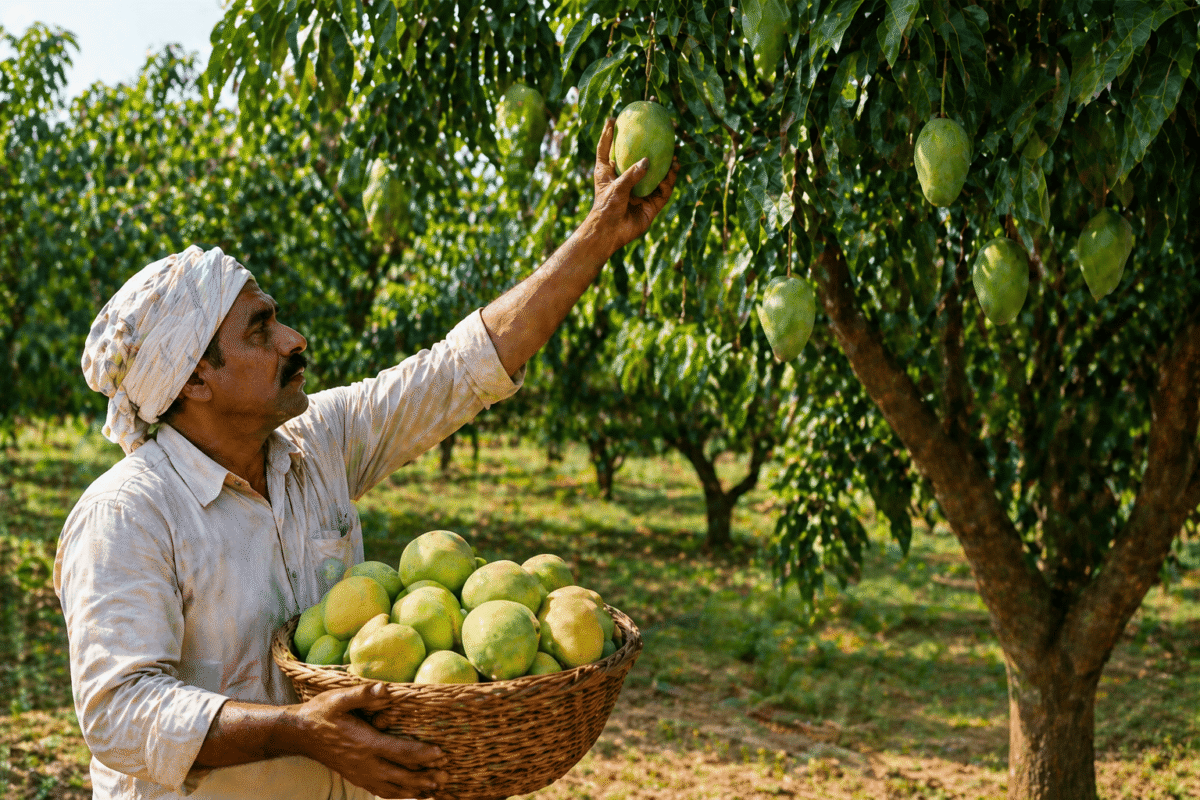
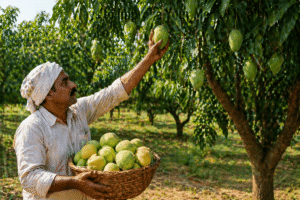
Manual Picking Process

Mangoes are hand-picked using:

  • Long picking poles
  • Soft baskets or crates
  • Skilled laborers trained to avoid damage

Workers ensure:

  • No dropping of fruit
  • No skin scratches
  • Proper stem cutting

This is the first quality control point.

Step 2 – Immediate Field Handling

Preventing Heat Damage

Once harvested, mangoes are sensitive to heat. In hot climates, even 30–60 minutes of exposure can start affecting quality.

So mangoes are quickly moved to:

  • Shaded collection areas
  • Temporary field packing spots

Initial Visual Sorting

At this stage, rough sorting begins:

  • Good fruit separated
  • Damaged or diseased fruit removed
  • Undersized mangoes filtered out

This prevents waste of packing resources later.

Step 3 – Transport to Packing House

Careful Loading Process

Mangoes are transported in covered vehicles to avoid sun exposure.

Key practices include:

  • Soft handling during loading
  • Avoiding overstacking
  • Minimizing vibration damage

Time-Sensitive Movement

This transfer is usually fast because:

  • Heat exposure reduces shelf life
  • Ripening process begins immediately after harvest

Speed is critical.

Step 4 – Washing and Pre-Treatment

Cleaning the Fruit

At the packing facility, mangoes are washed to remove:

  • Dust
  • Latex stains
  • Field residue

This improves appearance and hygiene.

Post-Harvest Treatment (If Applied)

Some exporters use treatments like:

  • Hot water treatment (for export compliance)
  • Fungicide dips (for shelf life protection)

These steps help reduce spoilage during long transport.

Step 5 – Grading and Sorting (Most Important Stage)

Size-Based Grading

Mangoes are sorted into categories such as:

  • Large
  • Medium
  • Small

Uniformity is critical for export cartons.

Quality-Based Selection

Beyond size, mangoes are checked for:

  • Shape
  • Skin color
  • Bruises or blemishes
  • Internal firmness

Only export-grade fruit moves forward.

Why This Step Matters So Much

This is where exporters either build or lose buyer trust.

A small inconsistency in grading can lead to:

  • Shipment rejection
  • Price reduction
  • Loss of repeat orders


Step 6 – Pre-Cooling Process

Removing Field Heat

After grading, mangoes are placed in cold storage rooms to remove heat absorbed during harvesting.

Typical conditions:

  • Temperature: around 12°C–13°C
  • Controlled humidity levels


Why Pre-Cooling Is Critical

Without pre-cooling:

  • Mangoes ripen too fast
  • Shelf life reduces significantly
  • Export risk increases

This step stabilizes fruit before packing.


Step 7 – Export Packaging

Carton Selection

Mangoes are packed in export-grade cartons designed for:

  • Ventilation
  • Strength
  • Stackability


Protective Layering

Inside cartons:

  • Foam sheets or paper wrapping
  • Careful spacing between fruits
  • Grade-based arrangement

This reduces friction damage during transport.


Labeling and Traceability

Each box includes:

  • Variety name
  • Grade and size
  • Farm or exporter details
  • Destination information

This ensures full traceability in international markets.

Step 8 – Quality Inspection Before Shipment

Final Export Check

Before loading, a final inspection is done.

Inspectors check:

  • Uniformity
  • Packaging strength
  • Temperature condition
  • Overall appearance

Buyer or Third-Party Inspection (Sometimes)

For large shipments, buyers may send inspectors to verify quality before dispatch.

This is common in:

  • UAE retail contracts
  • European supermarket supply chains

Step 9 – Documentation Preparation

Export Paperwork

No shipment moves without documents such as:

  • Phytosanitary certificate
  • Invoice and packing list
  • Certificate of origin
  • Export declaration

Compliance Requirements

Different markets require different standards:

  • EU: strict pesticide residue compliance
  • Middle East: general quality and freshness focus

Step 10 – Cold Chain Coordination

Temperature Protection Before Shipment

Mangoes are kept in controlled environments until loading.

This ensures:

  • No heat exposure
  • Stable ripening process

Transport to Airport or Port

Refrigerated trucks move mangoes to:

  • Airports (for air freight)
  • Sea ports (for container loading)

Step 11 – Final Shipment Loading

Careful Container Loading

Mango cartons are loaded into:

  • Air cargo pallets
  • Refrigerated sea containers (reefers)

Temperature Monitoring Begins

Once loaded:

  • Temperature is continuously monitored
  • Humidity levels are controlled

This ensures safe transit.

What Buyers Don’t See Behind the Scenes

Most buyers only see the final box-but behind it is:

  • Skilled labor coordination
  • Fast-paced logistics
  • Quality control teams
  • Cold chain management
  • Documentation experts

Everything happens within a very short time window to protect freshness.

Common Mistakes During This Stage

  • Delayed transport from farm to packing house
  • Poor grading consistency
  • Skipping pre-cooling
  • Weak packaging materials
  • Documentation errors
  • Lack of temperature control

Even one mistake can affect the entire shipment.

Why This Stage Decides Export Success

The period between harvest and shipment is where:

  • Quality is protected or lost
  • Buyer trust is built or broken
  • Profit margins are decided

A good harvest is not enough. Execution during this phase determines success in international markets.

Conclusion

Behind every exported mango box is a detailed, fast-moving system that ensures freshness, quality, and compliance.

From harvesting to grading, cooling, packing, and final shipment, every step is designed to protect the fruit and meet strict global expectations.

For exporters, this stage is not just logistics-it is the core of the entire business. Those who manage it well build strong international buyers, repeat orders, and long-term success in the global mango trade.

Cold Chain Management in Mango Export :Why It Matters

Introduction

In mango export, quality doesn’t depend only on farming or packaging. Even the best mangoes can lose value within hours if temperature control is ignored.

This is where cold chain management becomes the real game-changer.

Cold chain simply means keeping mangoes at the right temperature from the farm all the way to the final buyer. It sounds technical, but in reality, it’s what decides whether mangoes arrive fresh and profitable:or soft, overripe, and rejected.

For exporters in countries like Pakistan, where mangoes are shipped to long:distance markets such as the Middle East, UK, and Europe, cold chain is not optional. It is essential.

What Is Cold Chain Management in Mango Export?

Simple Meaning

Cold chain management is the controlled system of:

  • Cooling mangoes after harvest
  • Maintaining temperature during storage
  • Keeping conditions stable during transport
  • Protecting fruit until it reaches the buyer

It ensures mangoes stay fresh from farm to destination.

Why Mangoes Are Sensitive

Mangoes are climacteric fruits, meaning they continue to ripen after being picked.

This makes them highly sensitive to:

  • Heat
  • Humidity
  • Physical handling

Even a small temperature increase can speed up ripening and reduce shelf life.

Why Cold Chain Matters in Mango Export

  1. Extends Shelf Life

Without cold chain, mangoes may last only a few days after harvest.

With proper temperature control, shelf life can extend to:

  • 10–14 days (air freight)
  • 18–21 days (controlled sea freight)

This difference is critical for international trade.

  1. Maintains Taste and Texture

Heat exposure causes mangoes to ripen too quickly, leading to:

  • Soft texture
  • Loss of sweetness balance
  • Reduced aroma quality

Cold chain slows this process and preserves natural taste.

  1. Reduces Post:Harvest Losses

One of the biggest issues in mango export is wastage.

Without cold chain:

  • 10%–30% fruit loss is common

With proper handling:

  • Losses can drop significantly

This directly improves exporter profit margins.

  1. Improves Market Acceptance

Importers and supermarkets reject fruit that shows:

  • Over-ripening
  • Heat damage
  • Uneven maturity

Cold chain ensures uniform quality, increasing buyer trust.

How Cold Chain Works in Mango Export (Step:by:Step)

Step 1: Pre:Cooling at Farm Level

Right after harvesting, mangoes are moved to shaded or cooled areas.

Purpose:

  • Remove field heat
  • Slow down ripening process

This is the first and most important step.

Step 2: Sorting and Grading in Controlled Conditions

Mangoes are sorted in environments where temperature is controlled as much as possible.

This prevents:

  • Heat exposure during handling
  • Premature ripening during sorting

Step 3: Cold Storage at Packing House

Before packaging, mangoes are stored in cold rooms.

Typical conditions:

  • Temperature: 12°C–13°C (varies by variety)
  • Humidity: Controlled to prevent drying

Step 4: Pre:Cooling Before Shipment

Before loading, mangoes are cooled again to stabilize internal temperature.

This step ensures:

  • Longer transit life
  • Reduced spoilage during travel

Step 5: Refrigerated Transport to Airport or Port

Mangoes are transported in temperature:controlled vehicles.

Key goal:

  • Avoid exposure to outside heat

Even short exposure can damage quality.

Step 6: Cold Chain During Air Freight or Sea Freight

During shipment:

  • Air cargo holds are temperature controlled
  • Sea containers use reefer (refrigerated) systems

This maintains stability throughout transit.

Step 7: Cold Storage at Destination

Once mangoes arrive, they are immediately stored in cold facilities before distribution.

This ensures:

  • Gradual ripening
  • Better shelf display life

What Happens When Cold Chain Is Broken

Rapid Ripening

  • Heat exposure speeds up ripening, causing mangoes to become soft before reaching shelves.

Loss of Market Value

  • Even small quality changes can reduce prices significantly in retail markets.

High Rejection Rates

  • Supermarkets and importers may reject entire shipments if quality is inconsistent.

Customer Complaints

Poor cold chain results in:

  • Short shelf life
  • Spoiled fruit on display
  • Loss of retailer trust

Key Cold Chain Challenges in Pakistan Mango Export

  1. Infrastructure Gaps
  • Not all regions have advanced cold storage facilities.
  1. Transportation Delays
  • Traffic and logistics delays can expose fruit to heat.
  1. High Operational Costs

Cold chain systems require investment in:

  • Refrigeration units
  • Energy supply
  • Monitoring systems
  1. Lack of Awareness

Some small exporters still underestimate the importance of temperature control.

How Exporters Can Improve Cold Chain Efficiency

Invest in Pre:Cooling Systems

  • This is the most critical stage and should never be skipped.

Use Temperature Monitoring Devices

  • Track temperature during storage and transport.

Train Farm and Packing Staff

  • Human handling plays a major role in maintaining quality.

Partner with Reliable Logistics Providers

  • Choose transport companies experienced in perishable goods.

Minimize Handling Time

  • Faster movement from farm to cold storage reduces risk.

Why Importers Care About Cold Chain

Predictable Quality

  • Importers want consistent ripening behavior in every shipment.

Lower Business Risk

  • Cold chain reduces chances of financial loss due to spoilage.

Better Retail Performance

  • Properly handled mangoes sell faster and last longer in stores.

Real Impact on Export Success

Cold chain management directly affects:

  • Price per kg
  • Buyer trust
  • Repeat orders
  • Market reputation

In many cases, exporters with average mangoes but strong cold chain perform better than those with excellent mangoes but poor handling.

Conclusion

Cold chain management is not just a technical process-it is the backbone of modern mango export.

From farm to final buyer, every stage depends on temperature control and careful handling. A small mistake in this chain can turn premium mangoes into rejected cargo.

For exporters, investing in cold chain is not a cost-it is a strategy. It protects quality, builds trust, and ensures long-term success in competitive international markets.

In mango export, freshness is not just grown:it is preserved.

How Mangoes Are Selected at Farm Level for Export (Actual Process)

Introduction

When people think about mango exports, they usually imagine cartons, shipping containers, and airport cargo. But the real journey starts much earlier-at the farm level.

This is where the most important decisions are made: which mangoes will be exported, which will be rejected, and how quality is controlled before the fruit even leaves the orchard.

Farm-level selection is not random picking. It’s a structured process involving experienced pickers, graders, and exporters who work together under strict timing and quality rules.

If you understand how mangoes are selected at the farm stage, you will understand why some exporters succeed globally while others struggle-even with the same variety.

Step 1: Identifying the Right Orchard

Not Every Farm Is Suitable for Export

Export-grade mangoes don’t come from just any orchard. Buyers and exporters usually pre-select farms based on:

  • Tree health and age
  • Historical fruit quality
  • Pest control practices
  • Irrigation management

Pre-Season Farm Inspection

Before harvesting begins, exporters visit orchards to check:

  • Fruit setting quality
  • Expected yield
  • Disease or pest risk

Only farms that meet basic export standards are selected for supply contracts.

Step 2: Monitoring Fruit Growth Stage

Timing Is Everything

Mangoes are monitored closely from flowering to maturity.

Farm teams track:

  • Flowering success rate
  • Fruit size development
  • Color changes

Maturity Assessment Before Harvest

Export mangoes are not picked based on color alone. Experts check:

  • Skin texture
  • Aroma development
  • Dry matter content
  • Shoulder formation

This ensures mangoes ripen properly after export, not before.

Step 3: Manual Harvesting Process

Skilled Pickers Are Essential

Mango harvesting for export is done manually. Machines are not used because fruit damage must be minimized.

Pickers are trained to:

  • Cut fruit with proper stem length
  • Avoid dropping mangoes
  • Prevent skin scratches

Harvesting Tools and Technique

Special tools are used, such as:

  • Long-handled picking poles
  • Soft collection baskets
  • Foam-lined containers

Even small mistakes at this stage can reduce export quality.

Step 4: Initial Sorting at Farm Level

First Stage of Selection Begins Immediately

After harvesting, mangoes are taken to a shaded area for initial sorting.

Here, workers separate fruit into:

  • Export grade
  • Local market grade
  • Rejects

What Gets Rejected Early

Mangoes are removed if they have:

  • Bruises or cuts
  • Irregular shape
  • Insect damage
  • Undersized growth

Only visually perfect fruit moves forward.

Step 5: Size and Weight Grading

Export Requires Uniformity

One of the most important export requirements is uniform size.

Mangoes are sorted into categories like:

  • Large (premium export)
  • Medium (standard export)
  • Small (limited use)

Weight-Based Selection

Each mango is checked for weight consistency.

For example:

  • Chaunsa: usually 250g–350g preferred
  • Sindhri: larger sizes often preferred for Gulf markets

Uniformity improves market value significantly.

Step 6: Quality Control Checks

Visual Inspection

Each mango is examined for:

  • Skin color
  • Surface smoothness
  • Shape consistency

Firmness Testing

Mangoes are gently pressed to check firmness. This helps determine:

  • Transport durability
  • Ripening potential

Internal Quality Sampling

Random samples may be cut to check:

  • Sugar level (Brix)
  • Fiber content
  • Internal defects

Step 7: Pre-Cooling and Field Handling

Temperature Control Begins Early

After sorting, mangoes are kept in shaded or cooled environments.

This reduces:

  • Heat stress
  • Premature ripening
  • Moisture loss

Importance of Pre-Cooling

Without proper cooling, mangoes can spoil before reaching packing houses.

Pre-cooling helps:

  • Extend shelf life
  • Maintain firmness
  • Improve export performance

Step 8: Transport to Packing House

Careful Movement from Farm to Facility

Selected mangoes are transported in covered vehicles to avoid heat and damage.

During transport:

  • Overloading is avoided
  • Ventilation is maintained
  • Movement is minimized

Step 9: Final Export Grading at Packing House

Second Layer of Selection

At the packing house, mangoes undergo another strict check.

Here, exporters ensure:

  • Final grading accuracy
  • Defect removal
  • Market-specific sorting

Export Standards Are Applied

Only mangoes meeting export standards are packed, including:

  • Clean skin
  • Proper shape
  • Correct size category
  • No visible defects

Step 10: Packaging Preparation

Export Carton Filling

Mangoes are packed carefully into cartons with:

  • Foam protection
  • Paper wrapping (in some cases)
  • Air ventilation holes

Labeling and Traceability

Each box includes:

  • Farm details
  • Variety name
  • Grade and size
  • Exporter information

This is essential for international traceability.

Why Farm-Level Selection Matters So Much

It Defines Final Export Quality

No matter how good logistics or packaging is, poor farm selection cannot be fixed later.

Reduces Shipment Losses

Proper selection reduces:

  • Spoilage
  • Rejection at destination
  • Customer complaints

Builds Long-Term Buyer Trust

Consistent farm-level quality leads to:

  • Repeat orders
  • Strong importer relationships
  • Better pricing power

Common Mistakes at Farm Level

  • Harvesting too early or too late
  • Mixing grades during sorting
  • Poor handling during picking
  • Ignoring uniformity standards
  • Lack of cooling before transport

These mistakes directly affect export success.

Practical Insights for Buyers and Exporters

  • Work only with experienced orchard managers
  • Ensure trained pickers handle harvesting
  • Demand proper grading at source
  • Always verify pre-cooling systems
  • Insist on uniform export standards

Conclusion

Mango export success doesn’t start in warehouses or shipping containers-it starts in the orchard.

Farm-level selection is a disciplined process where every detail matters: timing, handling, grading, and cooling all decide the final quality that reaches international buyers.

Exporters who invest in strong farm-level control don’t just improve fruit quality-they build a reputation that wins long-term global contracts.

In mango trade, the real difference between average and premium exporters is made at the farm.