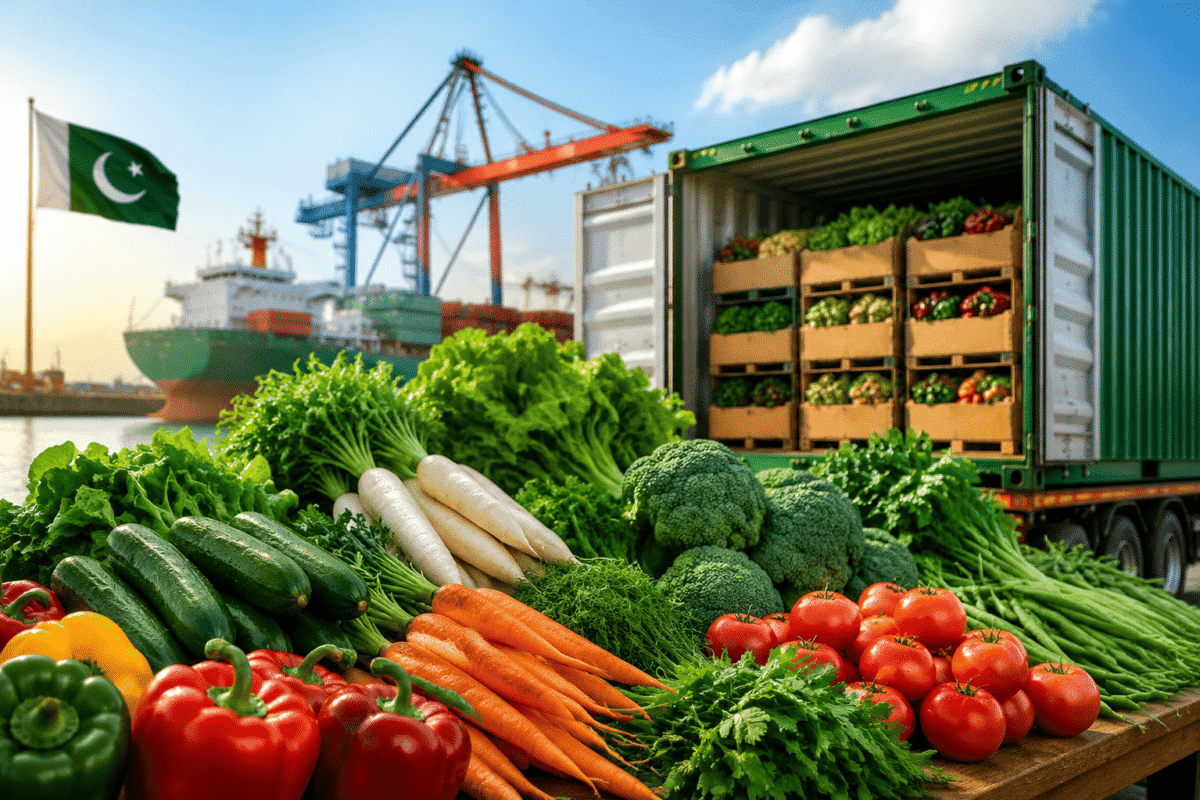
Pakistan produces more food than most people know about. Fertile soils, hard-working farming communities, vast tracts of land with some of the most nutritious soils on earth, yet for years a large portion of production did not go beyond the nearest market at all, and that is changing. And at Alpha Organic Foods, we are right in the middle of that change.
We are not just distributors. We are an organization that absolutely believes that Pakistani natural vegetables deserve a place in the cupboards of London, Dubai, Kuala Lumpur, and in the past. This article walks you through how we evaluate the export method and why it works.
Understanding Pakistan’s Position in Global Vegetable Trade
Pakistan ranks among the top agricultural producers in Asia. The US produces thousands and thousands of tons of vegetables every year, along with onions, potatoes, garlic, tomatoes, okra, sauerkraut, and much more, and the growing conditions here are often appalling. Different provinces offer unique climates that allow them to support many different plants throughout the year.
But traditionally, Pakistan’s share of the global export market for natural vegetables has been lower than it deserves. The difference is never about outstanding. It has been about structures, better cold chain infrastructure, more powerful certifications, reliable documentation, and distributors willing to meet global buyers on their own terms.
That is exactly the gap Alpha Organic Foods was built to fill.
Our Export Strategy is Built Around What Buyers Actually Need
Most exporters think about strategy from the inside out. They start with what they have and try to sell it. We do the opposite. We start with what international buyers need: consistent quality, clean paperwork, reliable timelines, and honest communication- and then we build everything backward from there.
Here is how our strategy breaks down:
1. Direct Farm Partnerships
We immediately work with licensed organic farmers across Punjab, Sindh, Khyber and Pakhtunkhwa. Not a middleman. No broken chains of traceability. When a customer in Germany asks where their garlic is grown, we are able to tell them the exact area, the farmer’s reputation for certification, and the harvest date
2. Quality Control at Every Stage
Our QC process starts in the field, not at the packaging facility. We monitor crops throughout the growing season. By the time vegetables reach our sorting floor, most quality issues have already been caught and corrected. What gets packed is what buyers expect.
3. Export-Ready Packaging
Different markets have different requirements. Gulf buyers often want bulk mesh bags. European retailers may require specific carton sizes and barcoding. We handle custom packaging as a standard service, not an extra request.
4. Cold Chain from Farm to Port
Fresh vegetables are unforgiving. One broken link in the cold chain and days of work are wasted. We use temperature-controlled storage and partner with freight specialists who understand perishable cargo. Your produce arrives fresh because we plan for it from day one.
5. Documentation Done Right
Phytosanitary certificates, certificates of origin, organic verification, and customs paperwork- we handle all of it. International buyers tell us this is one of the biggest pain points with other exporters. With Alpha Organic Foods, documentation is never the reason a shipment gets held up.
Target Markets and Why They Choose Us
Our strongest markets right now are the Gulf Cooperation Council countries, UAE, Saudi Arabia, Qatar, and Oman, where demand for fresh organic produce from trusted sources is growing every year. We also serve buyers across the UK, Germany, the Netherlands, Malaysia, and Sri Lanka.
What these buyers have in common is simple: they want quality they can count on, prices that make sense for their market, and an exporter who picks up the phone.
That is us.
Vegetables We Export Year-Round
Alpha Organic Foods exports a comprehensive range of fresh organic vegetables, including:
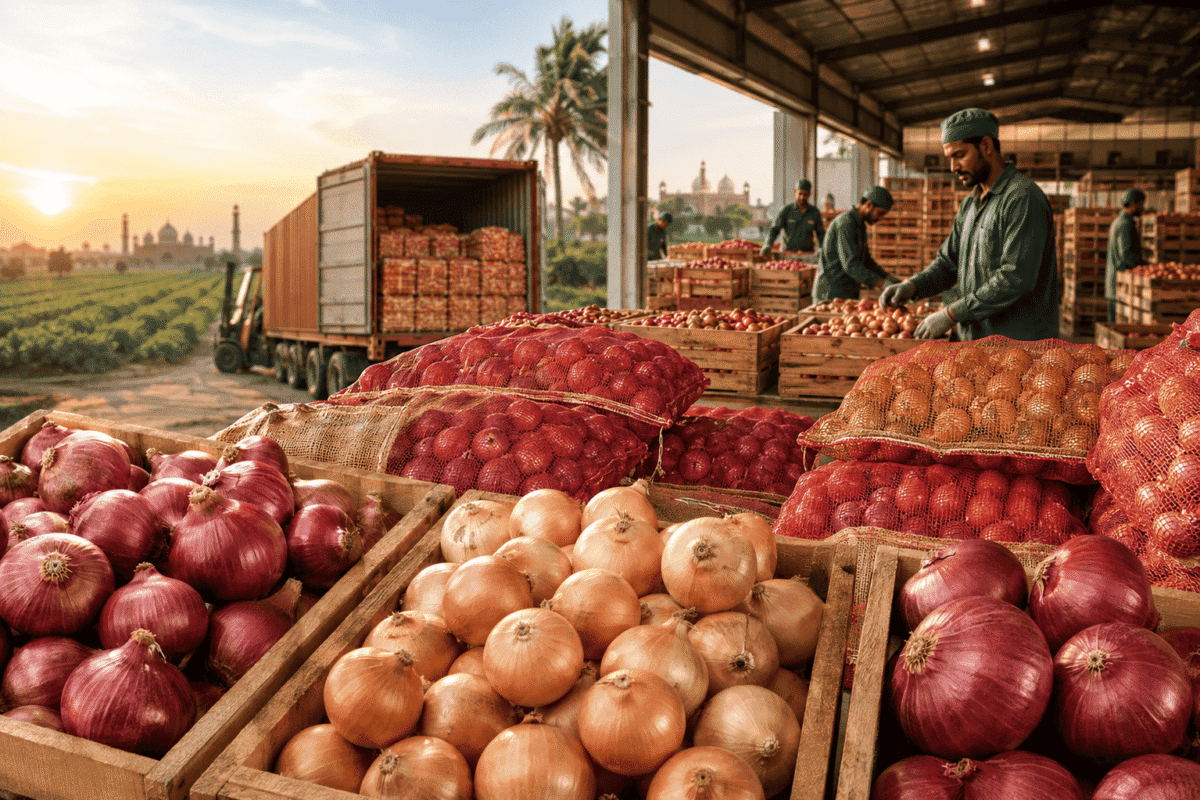
- Onions: Pakistan is a top global producer. Our organic onions are firm, consistent, and exported in high volumes.
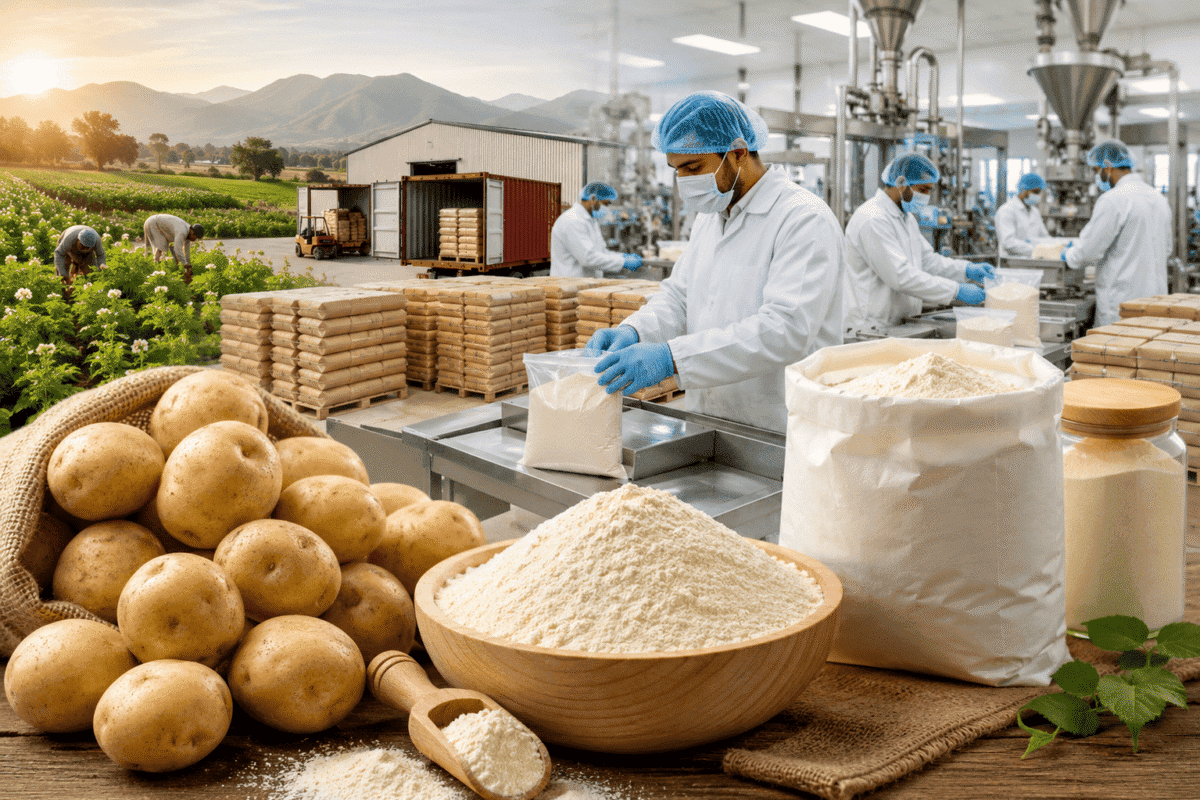
- Potatoes: Highland-grown, clean skin, excellent shelf life.
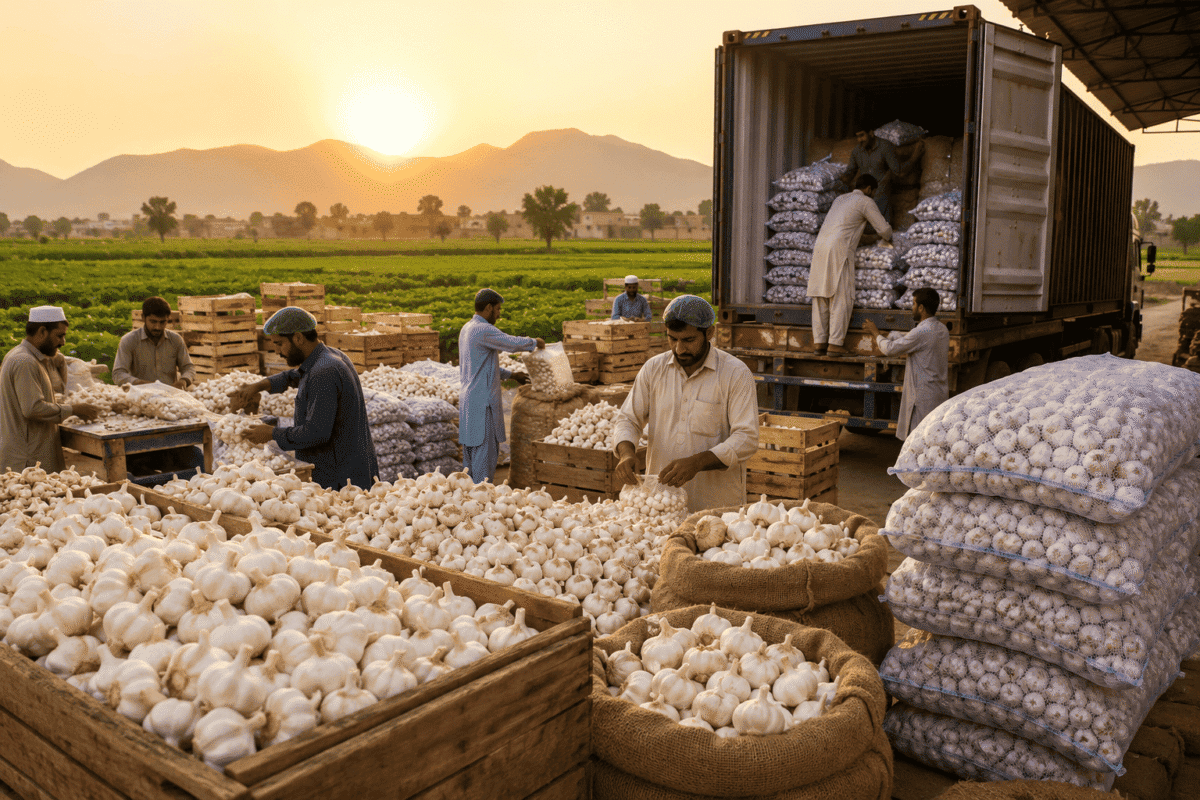
- Garlic: Premium aroma and strong medicinal value. High demand in health-conscious markets.
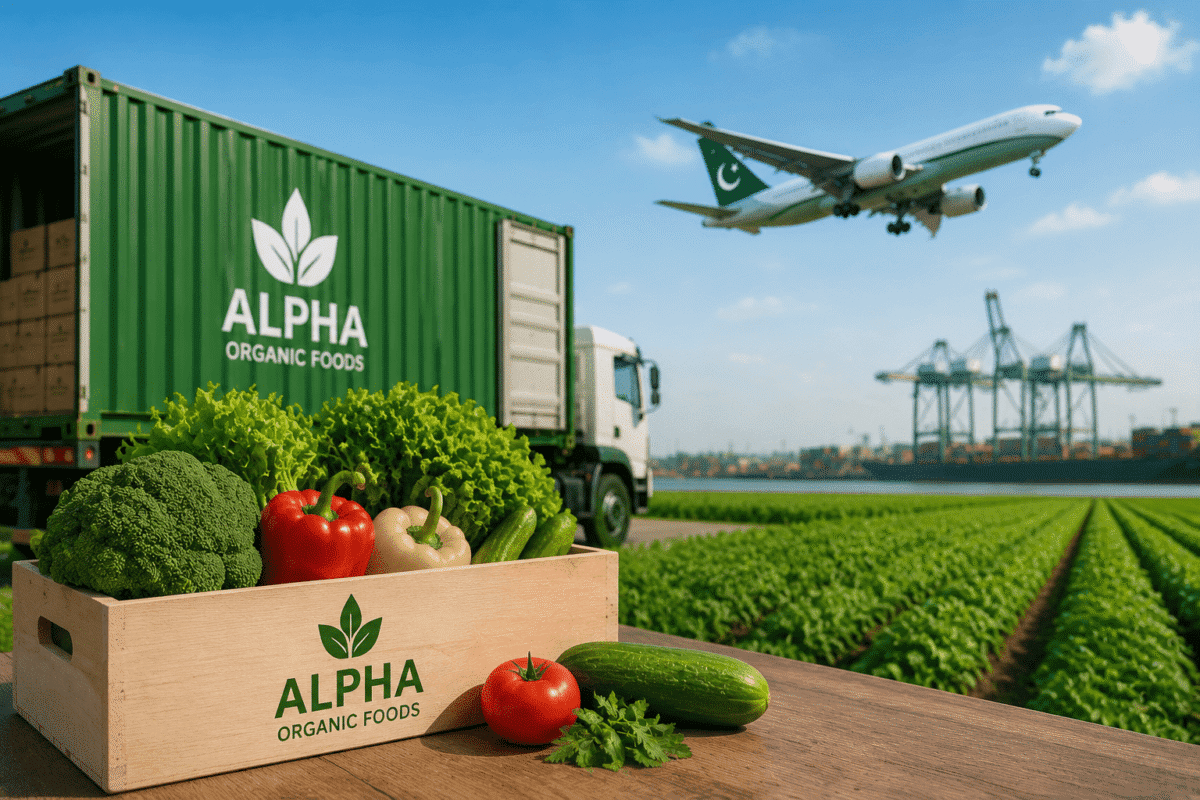
- Tomatoes: Harvested at peak ripeness, packed for long-haul freshness.
- Okra & Bitter Gourd: Essential for South Asian, Middle Eastern, and African ethnic markets globally.
- Seasonal Mixed Produce: Flexible mixed packing for buyers sourcing variety from one partner.
Certifications and Compliance
Every shipment clears Pakistan’s Department of Plant Protection and meets TDAP export regulations. We align with EU food safety standards, GCC import requirements, and destination-country compliance as needed. Buyers receive a full documentation package with every order.
Why the future of Pakistan’s exports is organic
Global consumers are analyzing brands more carefully than ever before. They want to understand where the food comes from, how it is grown, and whether the distribution chain has been modified ethically. Organic fertilizer is no longer a top-gloss niche; It is becoming a baseline expectation in emerging markets.
Pakistan has all the natural advantages to lead in this field. Soil, weather, agricultural background, distance, everything is here. What has been lacking are distributors who operate with the professionalism and reliability demanded by consumers worldwide.
Alpha Organic Foods is proof that Pakistani exporters can compete and win at the highest level.
Frequently Asked Questions
Q1: What differentiates Alpha Organic Foods from various vegetable exporters in Pakistan?
We handle the painting immediately with approved natural farmers, strictly pleasant from farm to port, and handle all documentation professionally. Buyers work with a trusted team from inquiry to shipment.
Q2: To which international destinations does Alpha Organic Foods currently export?
UAE, Saudi Arabia, Qatar, Oman, UK, Germany, Netherlands, Malaysia, and Sri Lanka, new markets are regularly added.
Q3: Can I request a sample shipment before ordering all?
In any case. We inspire it. Visit alphaorganicfoods.com and call our export team to arrange a sample for your evaluation.
Q4: What evidence does your vegetable carry?
Our products are sourced from certified organic farms and cleared through the Plant Protection Department of Pakistan. A full confirmation document is included in the order confirmation.
Q5: Do you adjust smaller import volumes or the most efficient box weights?
both. We work with new importers on test shipments and scale up to full FCL orders with established buyers.
Q6: How do I get a price or proximity quote?
Go to alphaorganicfoods.com and get it out through the touch plate. Our export team responds within one business day.