
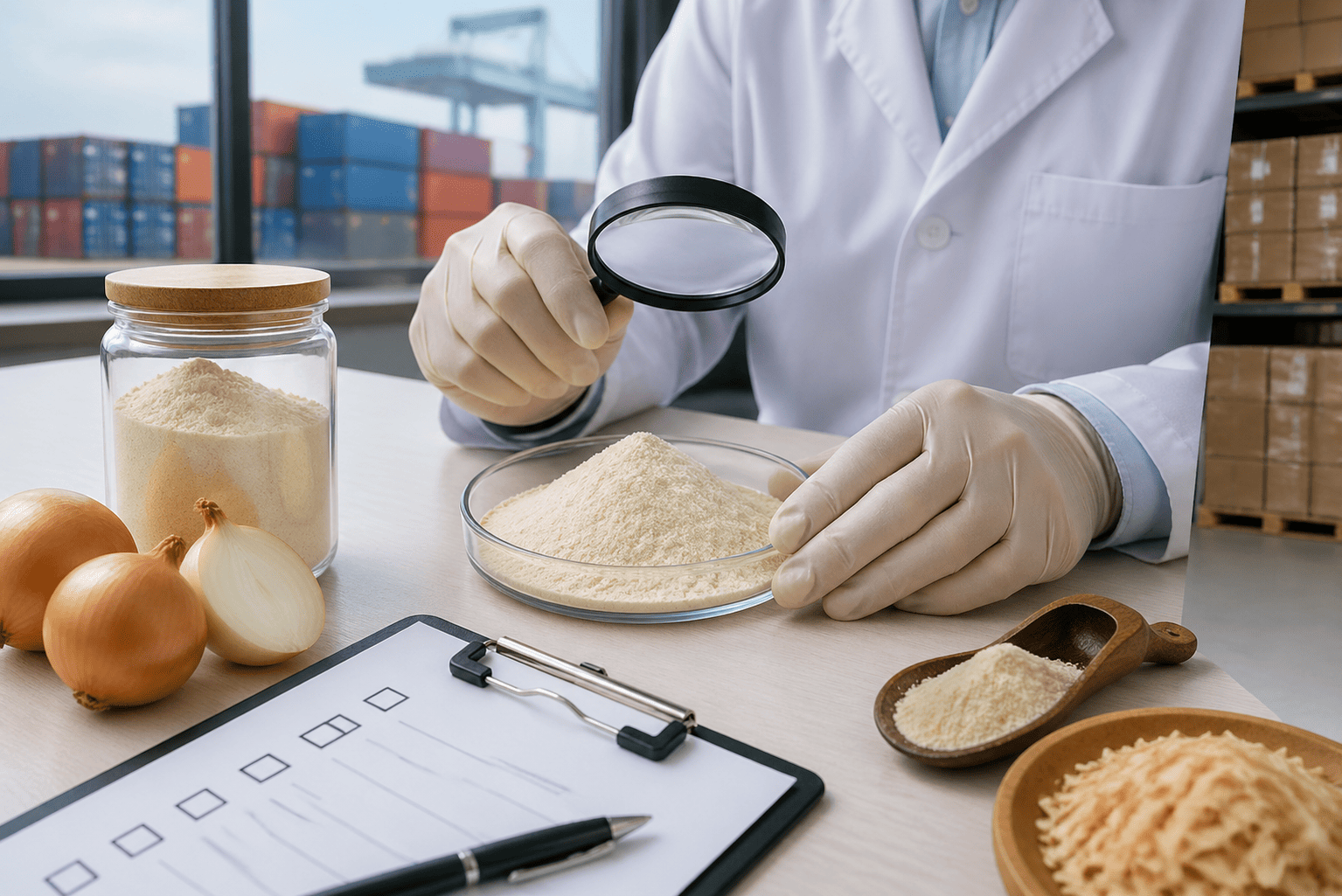
If you are working in export, especially in products like dry onion powder, one of the most critical parts of any deal is payment terms. Many new exporters focus only on product quality and buyers, but experienced exporters know that how you get paid is just as important as what you sell.
In international trade, payment terms define:
- When you receive money
- How secure the transaction is
- Who carries financial risk
Terms like LC (Letter of Credit), TT (Telegraphic Transfer), and Advance Payment are commonly used in dry onion powder export deals. Each comes with its own advantages, risks, and practical use cases.
In this article, I will explain in a simple and practical way how these payment terms work, focusing on risk control and financial structure so you can handle international deals confidently.
Why Payment Terms Matter in Export
Payment terms are not just a formality, they are the foundation of financial safety in international trade.
From Exporter’s Perspective
You need to ensure:
- Payment is received on time
- Risk of non-payment is minimized
- Cash flow remains stable
From Buyer’s Perspective
Buyers want:
- Security that goods will be shipped as agreed
- Time to manage their finances
- Trust in the supplier
A good payment structure balances risk and trust for both sides.
Common Payment Terms in Dry Onion Powder Export
Let’s understand the three most widely used methods.
Advance Payment (Full or Partial)
What It Means
In advance payment:
- The buyer pays before shipment
- Payment can be full or partial
How It Works
- Buyer confirms order
- Sends payment (full or percentage)
- Exporter processes and ships goods
Advantages for Exporter
- Lowest financial risk
- Immediate cash flow
- No dependency on buyer after shipment
Risks for Buyer
- Trust required in supplier
- Risk if supplier fails to deliver
When It Is Used
- New exporters working with small orders
- Sample or trial shipments
- High-demand or limited supply situations
TT (Telegraphic Transfer) – Bank Transfer
What It Means
TT is a direct bank-to-bank transfer.
It is usually structured as:
- Partial advance (e.g., before production)
- Remaining balance before shipment or after documents
How It Works
- Buyer pays a percentage in advance
- Exporter prepares goods
- Remaining payment is made before shipment or document release
Advantages
For Exporter:
- Lower risk compared to open credit
- Partial payment secured
For Buyer:
- Less upfront payment
- More flexibility
Risks
- Exporter risk if balance is delayed
- Buyer risk if supplier is unreliable
When It Is Used
- Medium trust relationships
- Regular buyers with some history
- Flexible deals
LC (Letter of Credit)
What It Means
LC is a bank-guaranteed payment system.
The buyer’s bank guarantees payment to the exporter, provided all conditions are met.
How It Works
- Buyer opens LC through bank
- Exporter ships goods
- Exporter submits required documents
- Bank releases payment if documents match LC terms
Advantages
For Exporter:
- High payment security
- Bank-backed guarantee
For Buyer:
- Payment only released after shipment proof
- Reduced risk of non-delivery
Risks
- Strict documentation requirements
- Delays if documents contain errors
- Bank charges involved
When It Is Used
- Large volume deals
- New international relationships
- High-risk markets
Comparing Payment Terms (Simple View)
| Payment Term | Risk for Exporter | Risk for Buyer | Complexity |
| Advance | Very Low | High | Low |
| TT | Medium | Medium | Medium |
| LC | Low | Low | High |
Risk Control in Payment Terms
Managing risk is the main goal of choosing the right payment method.
For Exporters
To reduce risk:
- Prefer advance or partial advance
- Work with trusted buyers
- Verify buyer credibility
For Buyers
To reduce risk:
- Use LC for large deals
- Work with verified suppliers
- Request documentation and samples
Financial Structure of Export Deals
Payment terms directly affect your business cash flow.
Cash Flow Planning
- Advance payments improve liquidity
- Delayed payments create pressure
- Balanced structure supports smooth operations
Cost Considerations
Different payment methods have costs:
- Bank charges (LC)
- Transfer fees (TT)
- Currency exchange differences
Exporters must include these in their planning.
How Payment Terms Change with Relationship
Payment structure evolves over time.
New Buyer
- Advance payment preferred
- Small trial order
Medium Relationship
- TT with partial advance
- Growing trust
Long-Term Buyer
- Flexible terms
- Larger volumes
- Faster transactions
Common Mistakes Exporters Make
Accepting Risky Terms Too Early
Agreeing to weak payment terms without trust can lead to losses.
Ignoring Documentation in LC
Small errors can delay or cancel payment.
Poor Communication
Unclear terms create confusion and disputes.
Not Verifying Buyer
Always check buyer background before finalizing terms.
Practical Tips for Exporters
To manage payment terms effectively:
Start Safe
Use:
- Advance payment for new buyers
- Small orders for testing
Build Trust Gradually
Move from:
- Advance → TT → LC (if required)
Keep Documentation Strong
Accurate documents ensure:
- Smooth transactions
- Faster payments
Work with Reliable Banks
Good banking partners help:
- Process payments faster
- Handle LC efficiently
What Buyers Expect
Global buyers look for:
- Clear payment structure
- Transparent terms
- Professional handling
- Flexibility based on relationship
Conclusion
Payment terms in dry onion powder international trade are a critical part of deal success. Understanding LC, TT, and advance payment helps exporters manage risk and maintain financial stability.
There is no single “best” payment method it depends on:
- Buyer relationship
- Deal size
- Risk level
The key is to balance security and flexibility.
When you structure payment terms correctly, you can:
- Protect your business
- Build trust with buyers
- Grow your export operations confidently
Because in international trade, success is not just about making a sale it’s about getting paid securely and consistently.