
Introduction
The Middle East and GCC (Gulf Cooperation Council) markets such as UAE, Saudi Arabia, Qatar, Oman, and Kuwait are among the strongest importers of dry mango powder from Pakistan. These markets have a deep demand for authentic souring agents used in traditional cuisine, spice blends, and processed foods.
However, not all grades of dry mango powder are accepted equally. Buyers in these regions follow strict grading standards, usage-based preferences, and quality expectations that directly influence purchasing decisions.
Understanding these preferences helps exporters position their products more effectively in high-value Gulf markets.
Understanding GCC Market Demand for Dry Mango Powder
Middle Eastern cuisine uses dry mango powder primarily as:
- A souring agent in spice blends
- A flavor enhancer in meat marinades
- An ingredient in ready-to-eat meals
- A component in snack seasoning
Because of this wide usage, buyers require consistent, food-safe, and application-specific grades rather than generic powder.
Quality Grading System Used by GCC Buyers
Buyers in the GCC region classify dry mango powder into different grades based on purity, color, and processing quality.
Premium Grade (Export Grade A)
This is the highest quality preferred by large distributors and food manufacturers.
Key characteristics:
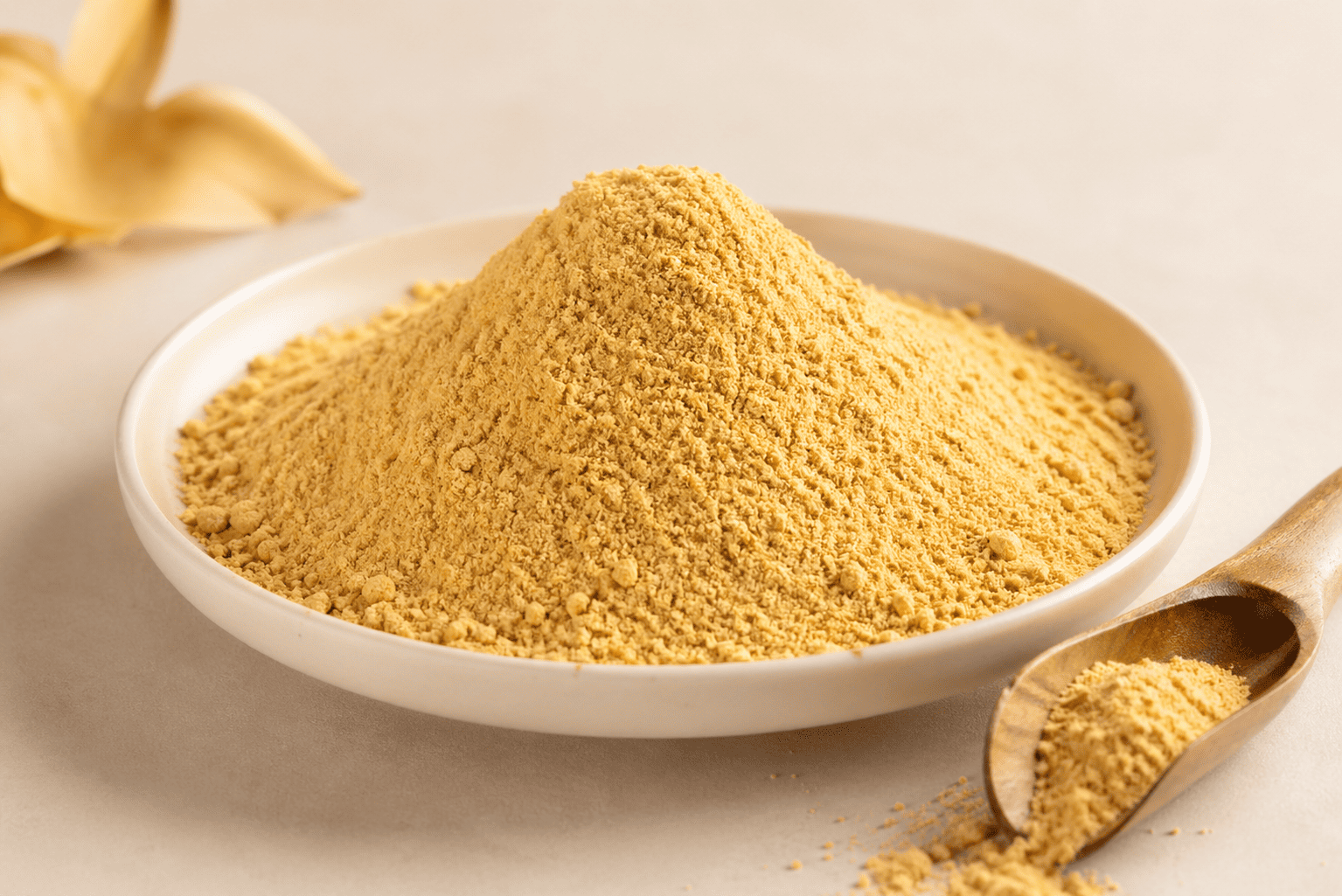
- Bright yellow to light golden color
- Fine, uniform particle size
- Strong natural aroma
- Low acidity variation
- Minimal fiber content
Used in:
- Premium spice blends
- Branded food products
- Gourmet seasoning mixes
Standard Grade (Grade B)
This grade is widely used in mid-range food manufacturing.
Key characteristics:
- Slightly darker color
- Medium texture
- Balanced sourness
- Slight variation in aroma
Used in:
- Local food brands
- Bulk seasoning production
- Restaurant supply chains
Industrial Grade (Grade C)
This is the lowest commercial grade, mainly for mass production.
Key characteristics:
- Darker color
- Coarser texture
- Higher fiber content
- Strong but less refined aroma
Used in:
- Large-scale processed foods
- Cost-sensitive manufacturing
- Bulk seasoning mixes
Why GCC Buyers Are Highly Quality-Sensitive
GCC buyers are extremely strict due to three main reasons:
- Premium Food Market Positioning
Countries like UAE and Saudi Arabia import high-quality food ingredients for:
- Luxury hospitality sector
- High-end supermarkets
- International restaurant chains
- Diverse Consumer Base
The region includes:
- Local Arab cuisine users
- South Asian expatriates
- European and Asian food industries
This requires consistent quality across multiple applications.
- Strong Import Regulations
GCC countries enforce:
- Strict food safety inspections
- Batch testing at ports
- Certification verification before clearance
Preferred Quality Standards for Pakistani Dry Mango Powder
Pakistan is a major supplier of mango-based products due to its strong mango production base. GCC buyers specifically expect:
Physical Quality Standards
- Moisture content below 10%
- Uniform yellowish color
- No foreign particles
- Fine grinding consistency
Sensory Standards
- Natural sour mango aroma
- No burnt or fermented smell
- Balanced acidity level
Safety Standards
- HACCP compliance
- Microbial safety certification
- Hygienic processing conditions
Usage-Based Preferences in GCC Markets
Different sectors in GCC countries prefer different grades:
Food Manufacturing Industry
- Prefers premium and standard grades
- Focus on consistency and bulk stability
Hospitality Sector (Hotels & Restaurants)
- Demands premium grade only
- Focus on taste purity and aroma
Retail & Supermarkets
- Requires branded, high-quality packaged powder
- Focus on appearance and shelf appeal
Spice Blending Companies
- Mix of standard and industrial grades
- Focus on cost efficiency and blending stability
Why Pakistani Dry Mango Powder is Highly Preferred
Pakistan is a key supplier due to several competitive advantages:
- Raw Mango Availability
High-quality mango varieties allow strong natural flavor development.
- Traditional Processing Expertise
Established dehydration and grinding techniques ensure authentic taste.
- Competitive Pricing
Pakistan offers cost-effective production compared to many global suppliers.
- Export Experience
Well-developed export channels to UAE, Saudi Arabia, and Oman ensure smoother logistics.
Common Buyer Expectations from Suppliers
GCC importers expect suppliers to deliver:
- Consistent grade separation
- Reliable shipment schedules
- Lab-tested quality reports
- Strong packaging standards
- Clear labeling and traceability
Packaging Preferences in GCC Market
Packaging plays a major role in buying decisions:
Preferred formats:
- 25 kg food-grade bags for bulk buyers
- 500g -1kg retail packs for supermarkets
- Vacuum-sealed or moisture-proof packaging
Important requirements:
- Arabic + English labeling
- Batch and expiry details
- Hygienic sealing standards
Common Mistakes Exporters Make
- Mixing Grades in One Shipment
This leads to immediate rejection by quality inspectors.
- Inconsistent Color or Texture
Even slight variation affects buyer trust.
- Weak Documentation
Missing certificates delay customs clearance.
- Poor Packaging Quality
Moisture damage is a common complaint in humid GCC climates.
Conclusion
Middle East and GCC buyers prefer specific grades of dry mango powder based on strict quality standards, usage needs, and regulatory requirements. Premium-grade consistency, proper certification, and reliable supply chains are the key factors that determine success in these markets.
For Pakistani exporters, aligning production with GCC expectations can unlock long-term contracts in one of the world’s most profitable food import regions.
FAQs
- Why do GCC buyers prefer specific grades of dry mango powder?
Because different food applications require different levels of purity, texture, and aroma.
- What is the most demanded grade in GCC markets?
Premium export-grade (Grade A) is most demanded for hotels and food brands.
- Is Pakistani dry mango powder popular in the Middle East?
Yes, due to strong flavor profile, affordability, and reliable supply.
- What certifications are required for GCC exports?
HACCP, Halal certification, and food safety compliance are commonly required.
- Can industrial-grade powder be exported to GCC?
Yes, but mainly for large-scale food manufacturing, not retail use.
- What is the biggest rejection reason in GCC imports?
Inconsistent quality and improper grade mixing are the top reasons.
- How important is packaging for GCC buyers?
Very important, especially moisture-proof and climate-resistant packaging.