
Introduction
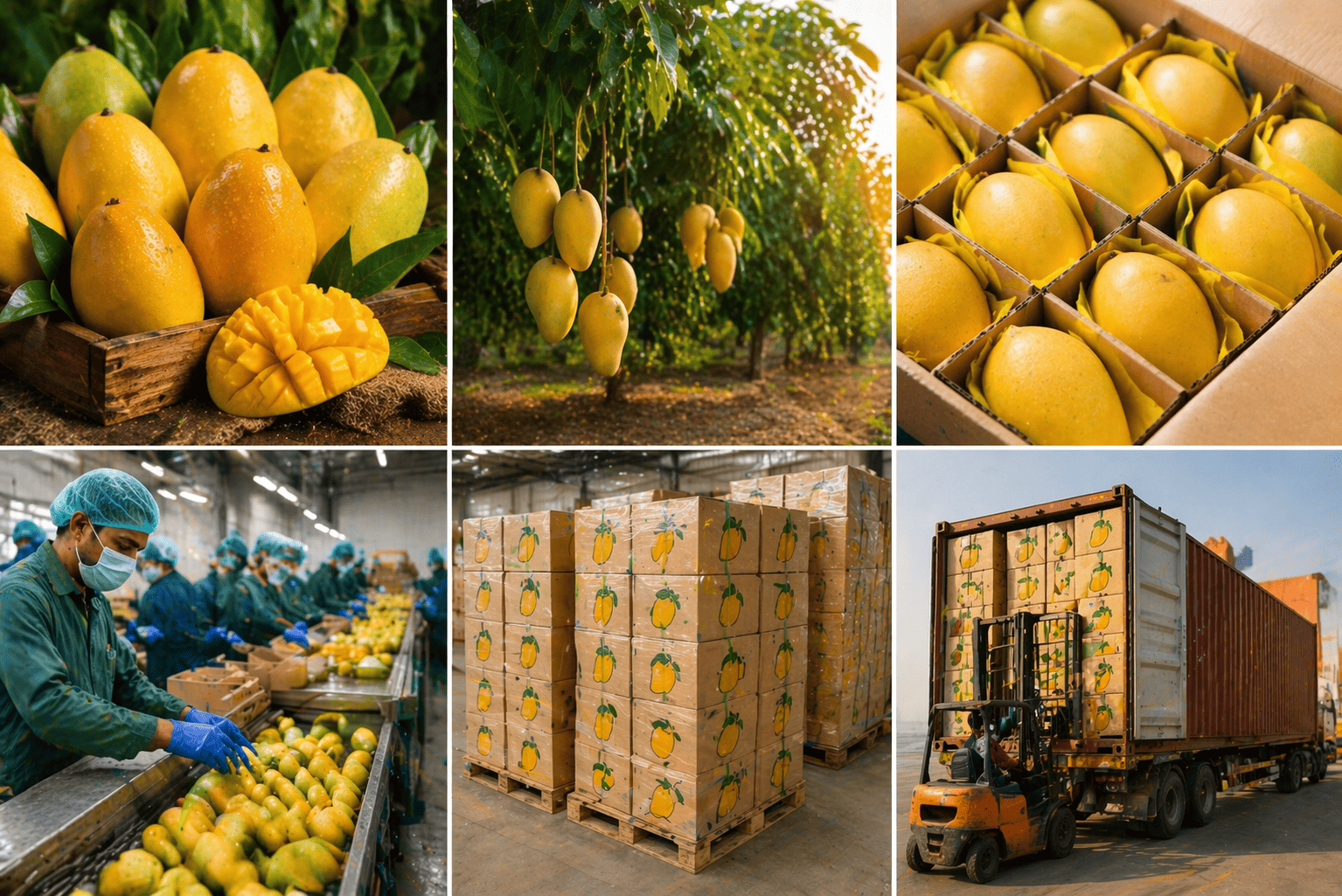
Selling mangoes to the UK is a big opportunity, but also one of the toughest markets to enter. Many Pakistani exporters assume that if their mangoes taste good, they’ll sell easily. The reality is very different.
UK supermarkets don’t just buy mangoes; they buy consistency, compliance, and reliability. Every box on their shelves represents their brand, so they follow strict standards before approving any supplier.
If you want to supply mangoes to UK retail chains, you need to understand exactly what they expect and where most exporters fall short. This guide breaks it down in a practical, real-world way.
Why UK Supermarkets Are So Strict
It’s About Consumer Trust
UK retailers operate in a highly competitive market. Customers expect perfect-looking, safe, and high-quality fruit every time they shop.
If one batch of mangoes disappoints, customers may switch stores. That’s why supermarkets avoid risk and only work with suppliers who meet their standards consistently.
Strong Food Safety Regulations
The UK follows strict food safety and import regulations. Supermarkets must ensure that every product they sell complies with these laws.
Even a small compliance issue can result in:
- Product rejection at port
- Financial losses
- Damage to supplier reputation
Key Requirements UK Supermarkets Expect
- Consistent Premium Quality
This is non-negotiable.
Supermarkets expect:
- Uniform size and shape
- Bright, natural color
- Minimal defects (usually under 5%)
They don’t want mixed-quality boxes. Every mango in the carton should look and feel similar.
- Global Certifications (Must-Have)
You cannot enter UK retail without proper certifications.
Common requirements include:
- GlobalG.A.P (for farm practices)
- HACCP (food safety management)
- GRASP (social compliance, often preferred)
Without these, most supermarket buyers won’t even consider your offer.
- Strict Residue and Food Safety Compliance
UK supermarkets are very sensitive about pesticide residues.
They require:
- Compliance with Maximum Residue Limits (MRLs)
- Traceability from farm to shipment
- Regular testing reports
Even one failed test can block future business.
- Shelf Life and Ripening Control
UK supply chains require mangoes that last longer.
Supermarkets expect:
- Controlled ripening capability
- Stable shelf life (10–14 days)
- Ability to handle cold storage
If mangoes ripen too fast, they can’t be displayed or sold properly.
- Retail-Ready Packaging
Packaging is not just for protection—it’s part of the product.
UK supermarkets prefer:
- Clean, strong cartons
- Barcoded labels
- Retail-ready packs (2kg / 4kg)
Attractive packaging increases shelf appeal and reduces handling effort.
- Traceability and Transparency
Every mango must be traceable.
Buyers want to know:
- Which farm it came from
- When it was harvested
- How it was processed
This builds trust and ensures accountability.
Reliable Supply Chain
UK retailers don’t tolerate delays.
They expect:
- On-time shipments
- Accurate quantity delivery
- Clear communication
Even one delayed shipment can affect future contracts.
What Varieties Work Best in the UK Market
Chaunsa – The Top Choice
Chaunsa is highly popular in the UK due to its sweetness and aroma.
It works well for:
- Ethnic markets
- Premium fruit segments
H3: Sindhri – Early Season Advantage
Sindhri enters the market earlier and attracts attention due to its size and appearance.
However, it must meet strict shelf-life expectations to succeed in retail.
How UK Supermarkets Select Suppliers
Step 1 – Supplier Screening
Buyers first check:
- Certifications
- Export history
- Production capacity
If these are not strong, the process usually stops here.
Step 2 – Sample Evaluation
Samples are tested for:
- Taste and texture
- Appearance
- Ripening performance
This stage is critical—many suppliers fail here.
Step 3 – Compliance Verification
Buyers verify documents and certifications.
They may also request:
- Audit reports
- Lab test results
Step 4 – Trial Shipment
Before full approval, a small shipment is tested in real conditions.
This checks:
- Transit performance
- Shelf behavior
- Customer response
Step 5 – Long-Term Contract
If everything goes well, supermarkets may move to regular orders.
But even then, performance is continuously monitored.
Common Reasons Suppliers Get Rejected
- Inconsistent quality across shipments
- Lack of certifications
- Poor packaging
- High pesticide residue levels
- Delayed communication
- Overpromising and under-delivering
These issues are more common than you might think—and they quickly damage credibility.
Practical Tips to Enter UK Supermarkets
Focus on Quality First
Don’t try to compete only on price. UK buyers prioritize reliability over cheap offers.
Invest in Certifications Early
Without proper certifications, your chances are very low.
Improve Packaging Standards
Strong, attractive packaging can immediately set you apart from competitors.
Build Relationships with Importers
Most supermarkets don’t buy directly from exporters. Work with trusted UK importers who already supply retail chains.
Start Small, Then Scale
Begin with trial shipments. Prove your consistency before expecting large orders.
Final Thoughts
Supplying mangoes to UK supermarkets is not easy—but it’s highly rewarding if done right.
The key is to understand that you’re not just selling fruit. You’re becoming part of a supply chain that values quality, safety, and trust above everything else.
If you can consistently deliver on these expectations, you won’t just get one order—you’ll build a long-term business in one of the world’s most valuable markets.