
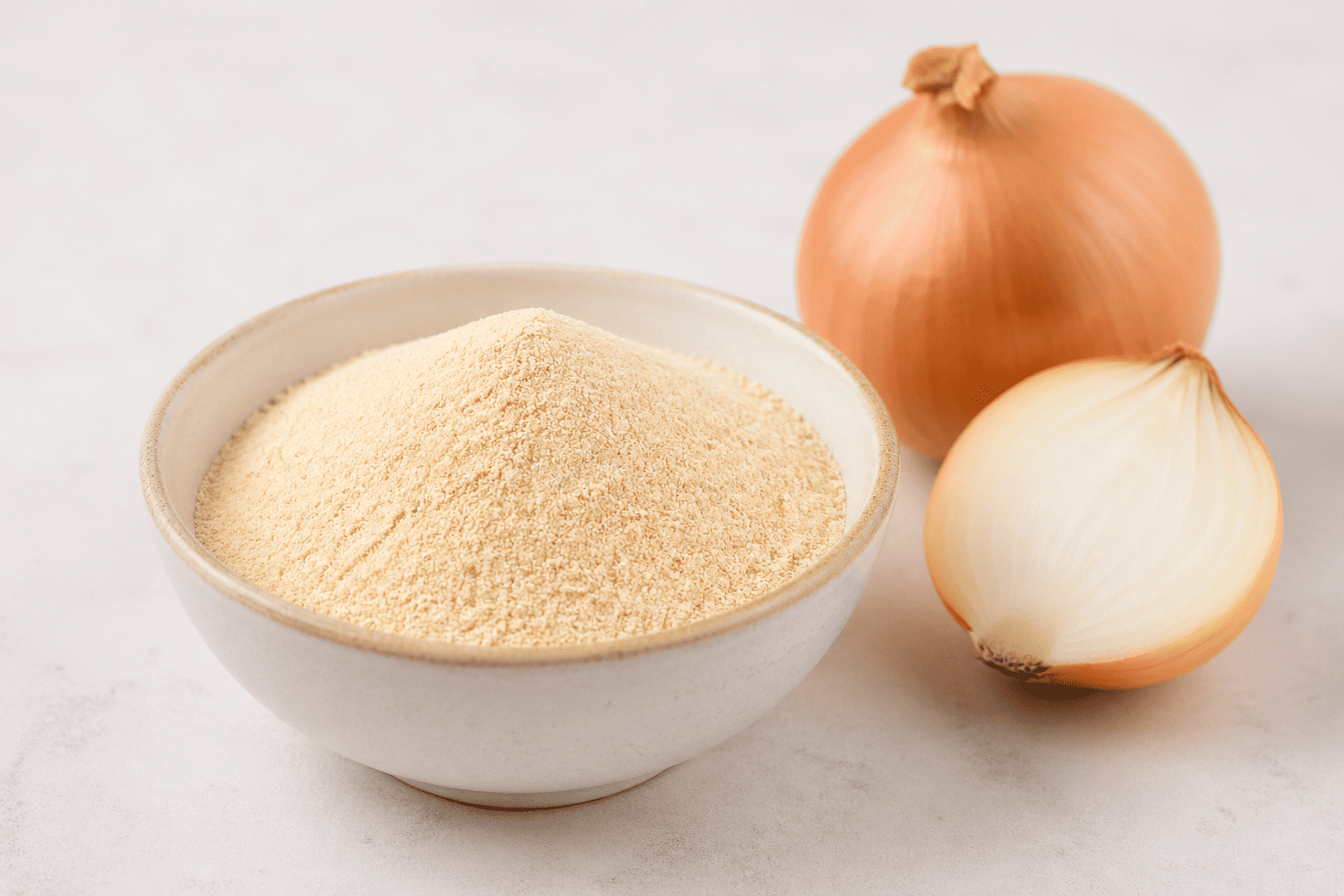
If you are working in export or sourcing dry onion powder, one question always matters: why does product quality vary between suppliers?
Two shipments may look similar, but their taste, aroma, and shelf life can be completely different. This difference is not random; it depends on key factors across the supply chain.
For international buyers, these factors directly impact:
- Product performance in food applications
- Customer satisfaction
- Storage stability
- Overall business profitability
In this article, I will explain in a simple and practical way what affects the taste, aroma, and shelf life of dry onion powder, focusing on processing methods and raw onion quality.
Why These Factors Matter in Export
Dry onion powder is valued for:
- Strong natural flavor
- Consistent aroma
- Long shelf life
If any of these are weak:
- Buyers need higher usage quantity
- Final product quality drops
- Storage becomes risky
That’s why understanding these factors helps both exporters and importers make better decisions.
1. Raw Onion Quality – The Foundation of Everything
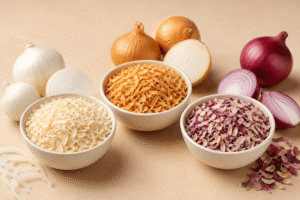
Everything starts with the raw onions.
What Defines Good Raw Onions
- Fresh and mature harvest
- High natural pungency (strong aroma compounds)
- Uniform size and quality
- Free from spoilage or damage
How Raw Quality Affects Final Product
Good onions produce:
- Strong flavor
- Rich aroma
- Better shelf life
Poor-quality onions lead to:
- Weak taste
- Dull aroma
- Faster degradation
Practical Insight
No processing method can fully fix poor raw material quality and must start at the source.
2. Variety and Origin of Onions
Not all onions are the same.
Why Variety Matters
Different onion varieties have:
- Different pungency levels
- Different moisture content
- Different flavor profiles
Impact on Export Quality
High-quality varieties result in:
- Stronger aroma
- Better taste consistency
- Improved processing efficiency
3. Dehydration Process (Drying Method)
This is one of the most critical factors.
Controlled Drying
Proper dehydration ensures:
- Retention of aroma compounds
- Stable color
- Low moisture content
Risks of Poor Drying
- Overheating → burnt taste, dark color
- Under-drying → high moisture, short shelf life
- Uneven drying → inconsistent quality
Why It Matters
Drying directly affects:
- Flavor strength
- Shelf stability
- Product safety
4. Grinding and Processing Quality
After drying, onions are converted into powder.
Key Factors
- Uniform grinding
- Controlled mesh size
- Minimal heat generation during grinding
Impact on Quality
Good grinding ensures:
- Smooth texture
- Consistent flavor distribution
Poor grinding can:
- Reduce aroma
- Create uneven product
5. Moisture Content
Moisture is a major factor in shelf life.
Ideal Condition
- Low and controlled moisture
- Free-flowing powder
Risks of High Moisture
- Clumping
- Microbial growth
- Reduced shelf life
Why It Matters
Even small moisture variations can significantly impact product stability during export.
6. Packaging Quality
Packaging protects the product after processing.
Key Features
- Food-grade materials
- Moisture-proof inner lining
- Airtight sealing
Impact on Shelf Life
Good packaging:
- Prevents moisture entry
- Preserves aroma
- Maintains freshness
Risks of Poor Packaging
- Aroma loss
- Contamination
- Shortened shelf life
7. Storage Conditions Before Shipment
Storage plays a major role in maintaining quality.
Ideal Storage
- Cool and dry environment
- Low humidity
- Clean and hygienic conditions
Poor Storage Effects
- Flavor degradation
- Moisture absorption
- Quality inconsistency
8. Transportation and Shipping Conditions
Export shipments go through long journeys.
Challenges
- Temperature fluctuations
- Humidity exposure
- Long transit time
Impact on Product
Without proper control:
- Aroma weakens
- Shelf life reduces
- Product may clump
Preventive Measures
- Strong packaging
- Proper container handling
- Efficient shipping routes
9. Exposure to Air (Oxidation)
Aroma compounds are sensitive to air.
What Happens
- Exposure to oxygen reduces aroma strength
- Flavor becomes dull over time
Solution
- Airtight packaging
- Proper sealing
- Minimal handling exposure
10. Time Factor (Age of Product)
Even under ideal conditions, time affects quality.
What Happens Over Time
- Gradual aroma loss
- Slight flavor reduction
Why It Matters
Fresh production is always preferred for export shipments.
Common Mistakes That Affect Quality
Exporters and buyers should avoid:
Using Low-Quality Raw Onions
Leads to weak final product.
Poor Drying Control
Causes flavor and color issues.
High Moisture Levels
Reduces shelf life.
Weak Packaging
Allows contamination and aroma loss.
Improper Storage
Damages product before shipment.
What Global Buyers Expect
Professional buyers look for:
- Strong natural taste
- Consistent aroma
- Long shelf life
- Stable quality during storage and shipping
Simple Summary of Key Factors
| Factor | Impact |
| Raw Onion Quality | Base of flavor and aroma |
| Dehydration Process | Controls taste and shelf life |
| Moisture Level | Affects stability |
| Packaging | Protects quality |
| Storage & Shipping | Maintains consistency |
Conclusion
The taste, aroma, and shelf life of dry onion powder in export supply are influenced by multiple factors but the most critical ones are raw onion quality and processing methods.
Every stage from sourcing to shipping plays a role in maintaining product quality. For exporters, controlling these factors ensures competitiveness in global markets. For buyers, understanding them helps in selecting reliable suppliers.
Because in international trade, quality is not created at one step, it is built through every stage of the supply chain.