
Introduction
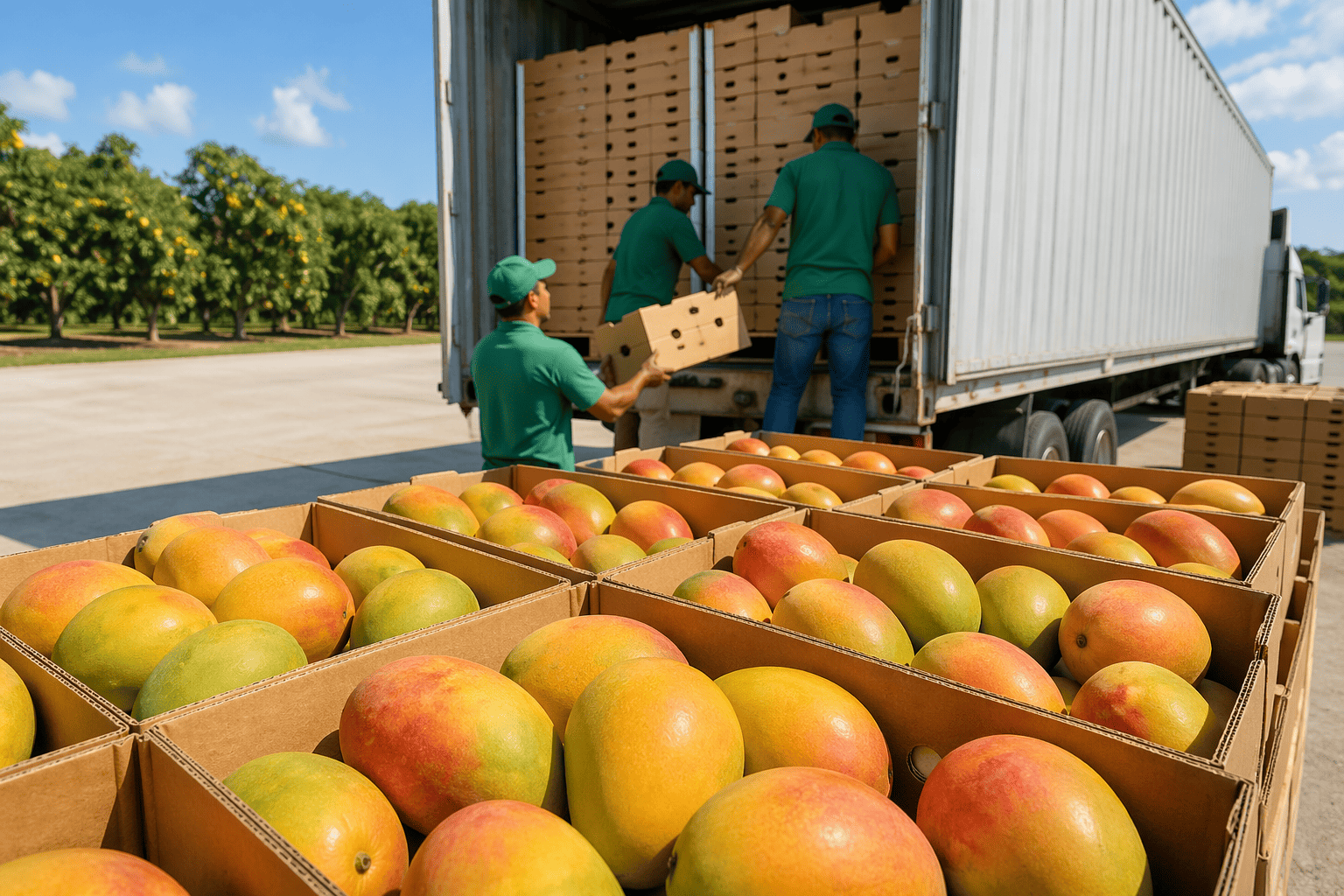
If you’ve ever asked a mango supplier, “What’s your minimum order?”, you’ve probably received a simple answer: “1 ton” or “5 tons minimum.”
But here’s the truth-MOQ (Minimum Order Quantity) in mango export is not as straightforward as it sounds.
Behind that number are hidden costs, logistical realities, and business decisions that suppliers don’t always explain clearly. And if you don’t understand these details, you can either overpay, overcommit, or miss a good opportunity.
This article breaks down what MOQ really means in mango exports, why it exists, and how buyers-especially new ones-can work around it smartly.

What MOQ Actually Means in Mango Export
It’s Not Just a Random Number
MOQ is the minimum quantity a supplier is willing to sell in one shipment.
But it’s usually based on:
- Packing efficiency
- Shipping costs
- Profit margins
So when a supplier says “1 ton minimum,” they’re thinking about their cost structure-not just your needs.
MOQ Depends on Shipment Type
MOQ changes depending on how you ship mangoes.
- Air shipments: Smaller MOQ (often 200-500 kg possible)
- Sea shipments: Larger MOQ (usually 1-5 tons or more)
Why? Because shipping economics are completely different.
The Hidden Costs Behind MOQ
Packing and Handling Costs
Export-quality packaging isn’t cheap.
Even for small orders, suppliers must:
- Sort and grade mangoes
- Use export cartons
- Handle carefully
These costs don’t reduce much with smaller quantities.
Logistics and Documentation
Every shipment-big or small-requires:
- Phytosanitary certificates
- Export documentation
- Customs clearance
These fixed costs make very small orders less attractive for suppliers.
Freight Efficiency
Shipping companies charge based on space and weight.
Small shipments often:
- Cost more per kg
- Have less priority
This is why suppliers push for higher MOQ-it improves cost efficiency.
Why Suppliers Set Higher MOQ
To Protect Their Margins
Small orders often mean:
- More work
- Lower profit
So suppliers prefer larger orders where margins are better.
To Reduce Operational Complexity
Handling many small orders can be difficult.
It involves:
- More coordination
- More documentation
- Higher risk of errors
Larger orders simplify operations.
To Filter Serious Buyers
MOQ is also used as a filter.
Suppliers often assume:
- Small buyers = higher risk
- Large buyers = long-term potential
So higher MOQ helps them focus on serious clients.
Real MOQ in Different Scenarios
Air Freight Orders
Typical MOQ: 200 kg – 500 kg
Best for:
- Testing new markets
- Premium mango sales
- Early-season shipments
Sea Freight (LCL – Less than Container Load)
Typical MOQ: 1 ton – 3 tons
Best for:
- Medium-scale buyers
- Cost control
- Expanding business
Full Container Load (FCL)
Typical MOQ: 10-20 tons
Best for:
- Large importers
- Established businesses
- Long-term contracts
What Suppliers Don’t Always Tell You
MOQ Is Often Negotiable
Many suppliers can reduce MOQ-but only if:
- You accept higher price per kg
- You’re flexible on delivery timing
Small Orders Cost More Per Unit
Even if a supplier agrees to a smaller MOQ, your cost per kg will likely be higher.
This is normal-and often unavoidable.
Mixed Shipments Are Possible
Some suppliers allow mixing:
- Different mango varieties
- Different grades
This helps meet MOQ without committing to one product.
Trial Orders Are Common
Serious suppliers often agree to smaller trial shipments to build trust.
But these are usually priced higher than bulk deals.
How Buyers Can Work Around MOQ
Start with Air Shipments
If you’re new, air freight is the easiest way to start small.
Yes, it’s expensive-but it reduces risk.
Partner with Other Buyers
You can combine orders with:
- Other importers
- Local distributors
This helps you reach MOQ together.
Negotiate Smartly
Instead of asking: “What’s your MOQ?”
Ask: “What’s the smallest quantity you can supply profitably?”
This opens the door for flexibility.
Build Relationships First
Suppliers are more flexible with buyers they trust.
Start small, perform well, and then negotiate better terms.
Common Mistakes Buyers Make
- Accepting MOQ without understanding costs
- Ordering too much too soon
- Ignoring freight impact on pricing
- Choosing cheapest option instead of best value
- Not testing quality before large orders
These mistakes can lead to financial loss or unsold stock.
Practical Tips for First-Time Buyers
- Start with a small trial shipment
- Focus on quality over quantity
- Understand full cost (product + freight + duties)
- Communicate clearly with suppliers
- Plan your sales before placing large orders
Final Thoughts
MOQ in mango export is not just a number-it’s a reflection of real costs, logistics, and business strategy.
Suppliers set MOQs to protect their operations, but that doesn’t mean buyers have no flexibility. With the right approach, you can start small, test the market, and grow step by step.
The key is to understand what’s behind the MOQ, not just accept it blindly.
Because in export business, smart decisions at the beginning often decide your long-term success.