
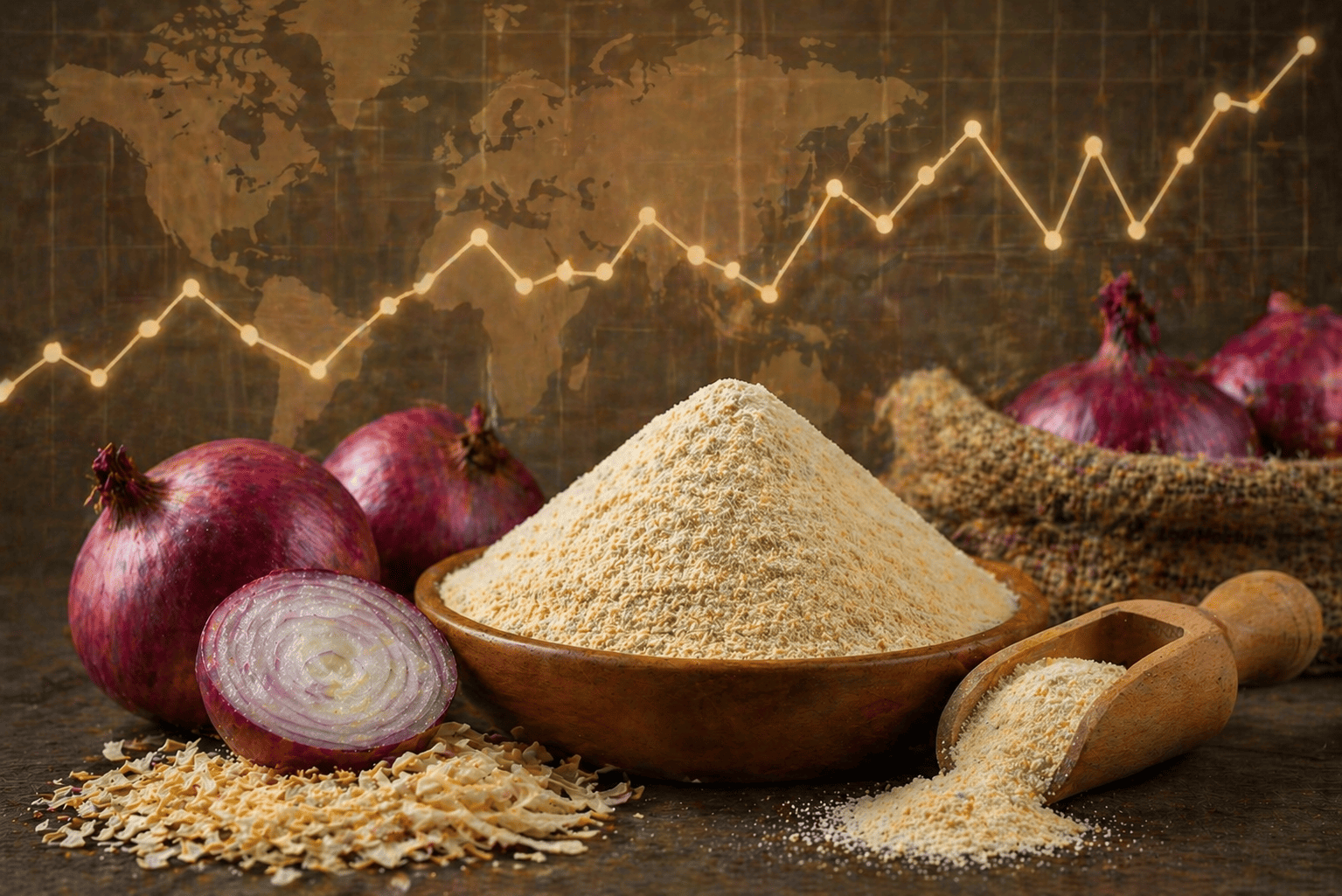
If you are working in export, especially in products like dry onion powder, one question always comes up: “What is the minimum order quantity (MOQ)?”
For many new exporters, MOQ can feel confusing. Some buyers ask for small quantities, while others demand bulk shipments. The reality is that MOQ is not random; it is based on logistics, cost efficiency, and buyer requirements.
In international trade, MOQ plays a major role in:
- Deciding whether a deal moves forward
- Determining profitability
- Filtering serious buyers from casual inquiries
In this article, I will explain in a simple and practical way how MOQ works in dry onion powder export, what global buyers expect, and how you can build the right MOQ strategy to succeed.
Why MOQ Matters in Export Business
MOQ is not just about quantity it is about efficiency and sustainability.
From Exporter’s Side
Exporters need MOQ because:
- Production setup has fixed costs
- Packaging and handling require resources
- Logistics works better in bulk
From Buyer’s Side
Buyers consider MOQ based on:
- Storage capacity
- Consumption rate
- Financial planning
Some buyers want smaller quantities for testing, while others prefer bulk for long-term supply.
What Global Buyers Typically Expect
MOQ expectations vary depending on the type of buyer.
Small Importers and Distributors
These buyers usually:
- Are new in the market
- Test suppliers before committing
- Prefer lower quantities
They are looking for flexibility, but they may not provide long-term volume immediately.
Medium-Sized Buyers
These buyers:
- Have regular demand
- Manage regional distribution
- Balance between testing and bulk buying
Large Food Manufacturers
These are the most serious buyers.
They usually:
- Require large volumes
- Focus on long-term contracts
- Prefer fewer, reliable suppliers
For them, MOQ is less of a concern; they are more focused on consistency and supply capacity.
How MOQ is Decided in Dry Onion Powder Export
MOQ is influenced by several practical factors.
1. Packaging Size
Bulk packaging plays a major role.
Common export packaging:
- 20kg or 25kg bags
MOQ is often calculated based on:
- Number of bags
- Container capacity
2. Shipping Efficiency
Shipping costs are more efficient in larger volumes.
For example:
- Partial shipments increase cost per unit
- Full container loads reduce cost
This is why exporters prefer MOQ aligned with container optimization.
3. Production Batch Size
Processing units operate in batches.
- Small orders disrupt production flow
- Larger orders improve efficiency
4. Market Distance
Exporting to distant markets like the USA or Europe requires:
- Higher MOQ to justify freight cost
- Better planning and inventory management
MOQ Strategy for Exporters
Instead of setting a fixed MOQ for everyone, smart exporters use flexible strategies.
Offer Tiered MOQ
You can structure MOQ like this:
- Lower MOQ for first trial order
- Higher MOQ for repeat orders
This helps you attract new buyers while maintaining profitability.
Use Trial Orders Smartly
Trial orders are important for building trust.
- Offer smaller quantity for testing
- Maintain full quality standards
- Convert trial into long-term supply
Align MOQ with Container Load
Design MOQ around:
- Full container loads
- Efficient shipping volumes
This improves cost management.
Balance Flexibility and Profit
Too low MOQ:
- Reduces margins
- Increases workload
Too high MOQ:
- Scares away new buyers
The key is balance.
Entry Barriers Created by MOQ
MOQ also acts as a filter in international trade.
For Buyers
High MOQ can be a barrier for:
- New importers
- Small businesses
But it also ensures that:
- Only serious buyers proceed
- Transactions remain efficient
For Exporters
If your MOQ is too high:
- You may miss new opportunities
If your MOQ is too low:
- You may attract low-quality inquiries
Common Mistakes Exporters Make
Keeping MOQ Too Rigid
Not adjusting MOQ based on buyer type limits growth.
Accepting Very Small Orders
Small orders can:
- Increase cost
- Create operational inefficiencies
Ignoring Long-Term Potential
Some small buyers grow into large clients. Rejecting them early can be a missed opportunity.
Not Explaining MOQ Clearly
Buyers should understand:
- Why MOQ exists
- How it benefits both sides
- Clear communication builds trust.
How Buyers Evaluate MOQ Offers
Buyers don’t just accept MOQ they evaluate it.
They consider:
- Storage capacity
- Sales volume
- Risk of unsold stock
Practical Approach for Exporters
To succeed in global markets:
Understand Your Cost Structure
Know your:
- Production cost
- Packaging cost
- Logistics cost
Communicate Value
Explain to buyers:
- Quality consistency
- Supply reliability
- Benefits of bulk purchasing
Build Relationships
MOQ becomes less of an issue when:
- Trust is established
- Business grows over time
What Global Buyers Really Want
At the end of the day, buyers are looking for:
- Flexible but practical MOQ
- Reliable supply
- Consistent quality
- Long-term partnership
Conclusion
Minimum order quantities in dry onion powder export are not just numbers; they are a reflection of logistics, cost efficiency, and business strategy.
Global buyers expect MOQ to be:
- Reasonable
- Justified
- Aligned with their needs
For exporters, the goal is to find the right balance between flexibility and profitability.
When you manage MOQ smartly, you can:
- Attract serious buyers
- Improve operational efficiency
- Build long-term export relationships
Because in international trade, success is not about selling small or large it’s about selling smart and sustainably