
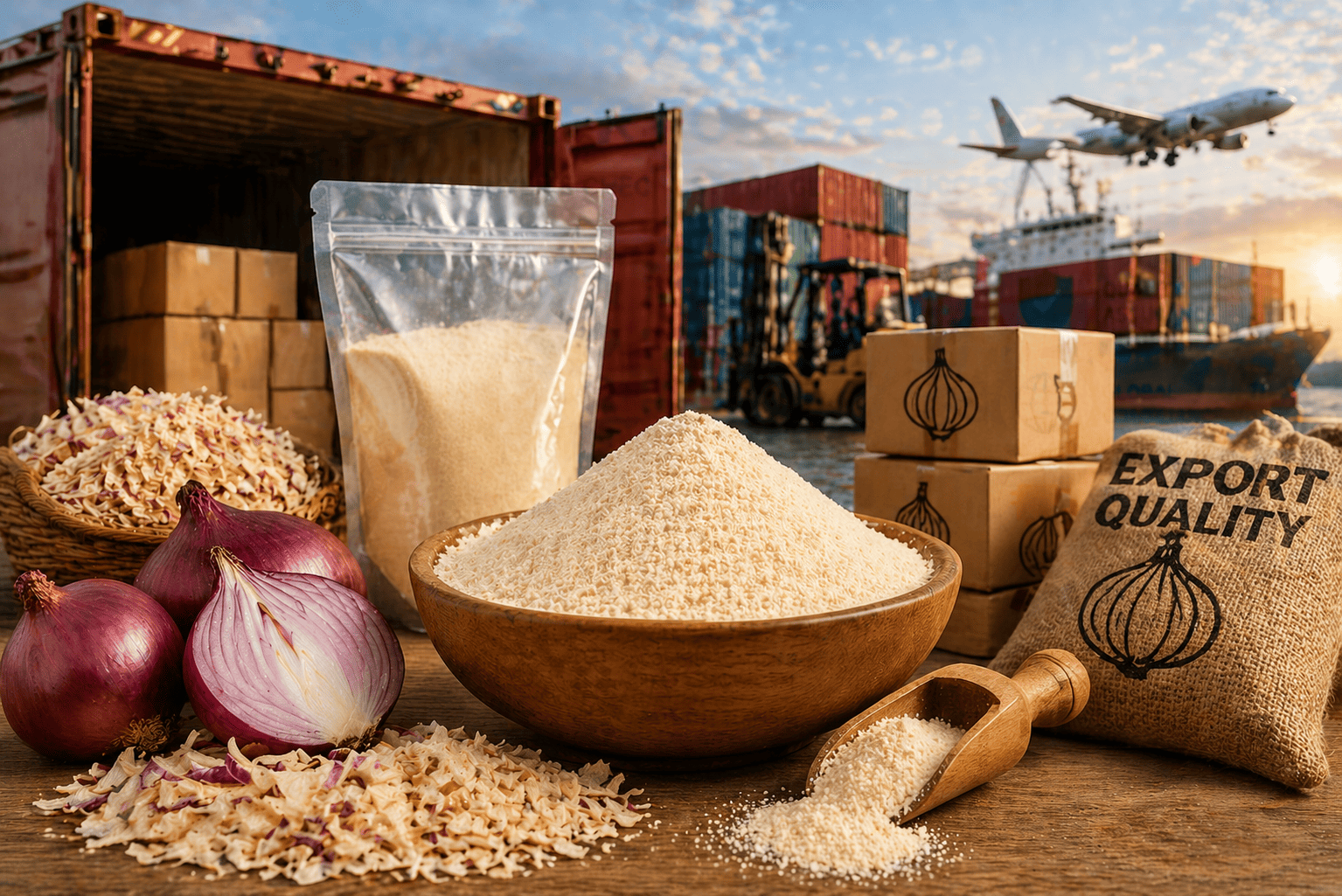
If you are working in export, especially in food ingredients like dry onion powder, one thing you cannot ignore is packaging. Many exporters focus only on product quality, but experienced buyers know that even the best product can lose its value if packaging is not done properly.
In international trade, packaging is not just about covering the product it is about:
- Protecting quality
- Maintaining shelf life
- Preventing contamination
- Meeting international standards
In this article, I will explain in a simple and practical way why food grade packaging is critical in dry onion powder export, focusing on shelf life and contamination prevention.
Why Packaging Matters in Export
Dry onion powder is a sensitive product. It reacts easily to:
- Moisture
- Air exposure
- Temperature changes
If packaging is weak, the product can:
- Lose aroma
- Form lumps
- Get contaminated
- Become unsuitable for use
That’s why buyers in international markets pay serious attention to packaging standards.
What “Food Grade Packaging” Actually Means
Food grade packaging is designed specifically for food products.
Key Characteristics
- Safe for direct food contact
- Free from harmful chemicals
- Non-reactive with product
- Hygienically processed
Why Buyers Demand It
Food manufacturers must follow strict safety standards. If packaging is not food grade:
- Product may be rejected
- Import clearance may fail
- Brand reputation can be damaged
Shelf Life: The Biggest Impact of Packaging
How Packaging Affects Shelf Life
Dry onion powder has a naturally long shelf life but only if stored correctly.
Good packaging helps:
- Maintain low moisture level
- Protect from air exposure
- Preserve aroma and flavor
Risks of Poor Packaging
If packaging is weak:
- Moisture enters the product
- Powder becomes clumpy
- Flavor strength reduces
- Shelf life decreases
Practical Impact
For buyers:
- Shorter shelf life means financial loss
- Product may expire before use
For exporters:
- Risk of complaints and rejected shipments
Contamination Prevention in Export Supply Chain
Types of Contamination Risks
During export, dry onion powder can be exposed to:
- Dust and dirt
- Microbial contamination
- Foreign particles
- Chemical exposure
Role of Packaging
Proper packaging acts as a barrier against:
- External environment
- Handling during loading/unloading
- Long shipping journeys
Why It Matters
Food safety is non-negotiable in global markets. Even minor contamination can:
- Lead to shipment rejection
- Cause legal issues
- Damage long-term relationships
Common Packaging Materials Used
Exporters typically use:
Multi-Layer Packaging
- Outer Kraft paper bags
- Inner food-grade plastic lining
Key Features
- Moisture resistance
- Strong durability
- Protection during handling
Bulk Packaging Standards
Common formats include:
- 20kg or 25kg bags
- Sealed and labeled properly
Importance of Moisture Control
Moisture is the biggest enemy of dry onion powder.
How Packaging Helps
- Prevents moisture entry
- Maintains product dryness
- Protects during humid conditions
Risks Without Moisture Protection
- Clumping
- Microbial growth
- Product spoilage
Handling and Transportation Protection
Dry onion powder goes through a long journey:
- Factory → Warehouse
- Warehouse → Port
- Port → Destination country
Role of Packaging
Strong packaging ensures:
- Bags don’t tear
- Product stays intact
- Quality remains consistent
Buyer Expectations in International Markets
Global buyers expect:
- Clean and hygienic packaging
- Proper sealing
- Food-grade materials
- Clear labeling
Why This Matters
Buyers often inspect packaging before approving shipments.
If packaging is poor:
- Trust is reduced
- Future orders may stop
Compliance with International Standards
Different markets have strict packaging requirements.
What Buyers Check
- Food safety compliance
- Material safety
- Labeling accuracy
Impact on Export
Non-compliant packaging can:
- Delay customs clearance
- Lead to rejection
- Increase costs
Common Mistakes Exporters Make
Using Low-Quality Packaging
This leads to:
- Damage during transit
- Quality loss
Ignoring Inner Lining
Without inner protection:
- Moisture enters easily
Poor Sealing
Weak sealing increases contamination risk.
Inadequate Labeling
Missing information creates compliance issues.
How Exporters Can Improve Packaging
To meet international standards:
Invest in Quality Materials
Use:
- Strong outer bags
- High-quality inner liners
Focus on Sealing
Ensure:
- Proper closure
- No leakage
Maintain Hygiene
Packaging process should be:
- Clean
- Controlled
- Safe
Follow Buyer Requirements
Different buyers may have specific packaging needs always confirmed before shipment.
What Good Packaging Achieves
Strong packaging ensures:
- Longer shelf life
- Better product safety
- Reduced risk of rejection
- Strong buyer confidence
Conclusion
Food grade packaging is not optional in the dry onion powder export industry, it is essential. It directly impacts shelf life, product safety, and overall quality.
For exporters, investing in proper packaging means:
- Protecting product value
- Reducing risk
- Building long-term trust with buyers
Because in international trade, it’s not just what you ship, it’s how safely and professionally you deliver it that defines your success.