
Introduction
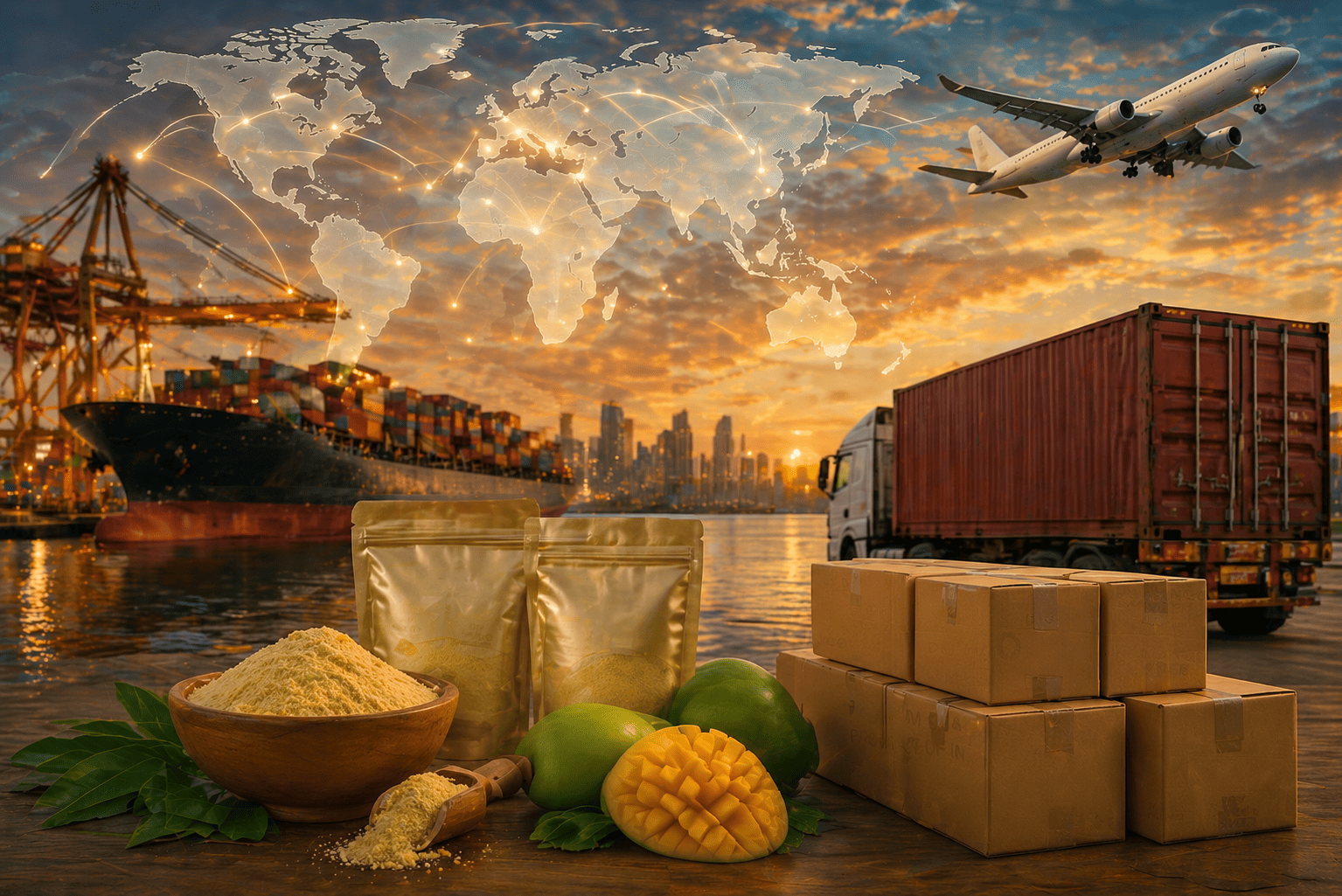
The journey of dry mango powder from farm to international markets is a complex, multi-stage process. It involves careful coordination between farmers, processors, quality teams, logistics providers, and exporters.
In today’s global food industry, buyers demand full end-to-end traceability, quality control, and safe handling at every stage. A well-managed supply chain ensures product consistency, compliance, and timely delivery.
Understanding this supply chain helps exporters optimize operations and meet international buyer expectations.
Overview of the Supply Chain Flow
The dry mango powder supply chain typically follows these stages:
- Mango farming and harvesting
- Raw material collection and transport
- Processing and dehydration
- Grinding and packaging
- Quality testing and certification
- Warehousing and storage
- Export logistics and shipment
Each stage must be carefully managed to maintain product quality.
Stage 1: Mango Farming and Harvesting
Raw Material Source
The process begins at mango farms where unripe green mangoes are cultivated.
Harvesting Practices
- Mangoes are harvested before ripening
- Selection focuses on firmness and acidity
- Avoidance of damaged or diseased fruit
Traceability at Farm Level
Modern supply chains maintain:
- Farm identification records
- Harvest dates
- Supplier tracking
This ensures accountability from the very first stage.
Stage 2: Raw Material Collection and Transportation
Collection Process
Mangoes are collected from farms and transported to processing units.
Transportation Conditions
- Use of clean crates or containers
- Protection from contamination
- Quick transfer to processing facilities
Risks at This Stage
- Physical damage to mangoes
- Delays leading to spoilage
Efficient logistics ensures freshness and quality retention.
Stage 3: Processing and Dehydration
Initial Processing
- Washing and cleaning
- Peeling and slicing
Dehydration Process
- Sun drying or mechanical drying
- Controlled temperature drying for export-grade quality
Importance of Control
- Prevents microbial growth
- Maintains natural flavor and color
Traceability continues with:
- Batch numbering
- Production records
Stage 4: Grinding and Packaging
Grinding Process
Dried mango slices are converted into powder using industrial mills.
Packaging Process
- Use of food-grade materials
- Moisture-proof sealing
- Batch labeling
Traceability Elements
- Batch codes
- Production dates
- Packaging details
These identifiers help track the product through the supply chain.
Stage 5: Quality Testing and Certification
Quality Checks
- Moisture content (≤10%)
- Color and texture consistency
- Aroma and taste
Laboratory Testing
- Microbial safety
- Chemical analysis
- Adulteration checks
Certification Process
- HACCP
- ISO standards
- Market-specific approvals
Stage 6: Warehousing and Storage
Storage Conditions
- Cool and dry environment
- Controlled humidity levels
- Protection from pests
Inventory Management
- FIFO (First In, First Out) system
- Batch tracking
Proper storage ensures:
- Extended shelf life
- Consistent product quality
Stage 7: Export Logistics and Shipment
Pre-Shipment Preparation
- Final inspection
- Documentation preparation
- Packaging verification
Key Export Documents
- Commercial invoice
- Packing list
- Bill of lading
- Certificate of origin
Shipping Process
- Container loading
- Freight booking
- Customs clearance
Transit Conditions
- Protection from humidity
- Proper container handling
End-to-End Traceability in Supply Chain
Traceability is a critical requirement in modern export markets.
What Traceability Covers
- Farm origin
- Processing batch
- Quality testing results
- Shipment details
Why It Matters
- Ensures food safety
- Enables product recall if needed
- Builds buyer trust
Advanced systems use digital tracking for complete visibility.
Handling Standards Across the Supply Chain
Hygiene Control
- Clean facilities
- Worker safety practices
- Sanitized equipment
Quality Control
- Continuous monitoring
- Standard operating procedures (SOPs)
Risk Management
- Backup suppliers
- Inventory buffers
- Logistics planning
Common Supply Chain Challenges
- Raw Material Variability
Different mango quality affects the final product.
- Processing Delays
Can impact moisture levels and quality.
- Storage Issues
Improper conditions lead to spoilage.
- Logistics Disruptions
Delays in shipping affect delivery timelines.
How Exporters Can Optimize Supply Chain
To improve efficiency and reliability:
- Build strong farmer networks
- Implement batch tracking systems
- Invest in modern processing technology
- Maintain proper storage facilities
- Partner with reliable logistics providers
A strong supply chain ensures consistent export performance.
Key Supply Chain Checklist
Before export, ensure:
- Raw material traceability
- Controlled processing environment
- Verified quality testing
- Proper packaging and labeling
- Complete export documentation
Conclusion
The supply chain of dry mango powder is a structured process that requires precision, coordination, and strict quality control. From farm-level sourcing to final export shipment, each stage contributes to product quality and compliance.
End-to-end traceability and proper handling are essential for meeting international standards and building long-term buyer trust. Exporters who optimize their supply chain gain a strong competitive advantage in global markets.
FAQs
- What is the first step in the supply chain?
Mango farming and harvesting of unripe green mangoes.
- Why is traceability important?
It ensures product safety and allows tracking from farm to shipment.
- How is quality maintained during processing?
Through controlled drying, grinding, and regular testing.
- What documents are required for export?
Invoice, packing list, bill of lading, and certificate of origin.
- How is the product stored before shipment?
In cool, dry, and controlled warehouse conditions.
- What are common supply chain risks?
Quality variation, delays, and improper storage.
- How can exporters improve supply chain efficiency?
By using technology, strong logistics, and quality control systems.