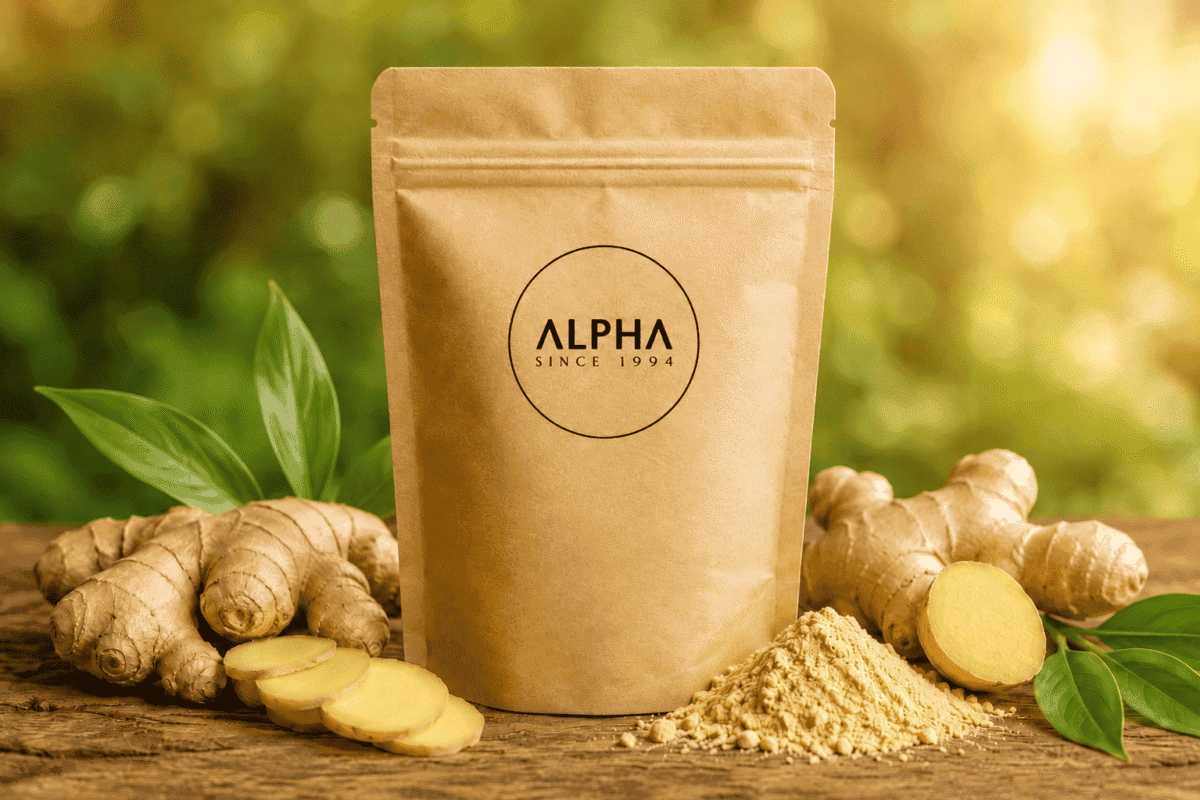
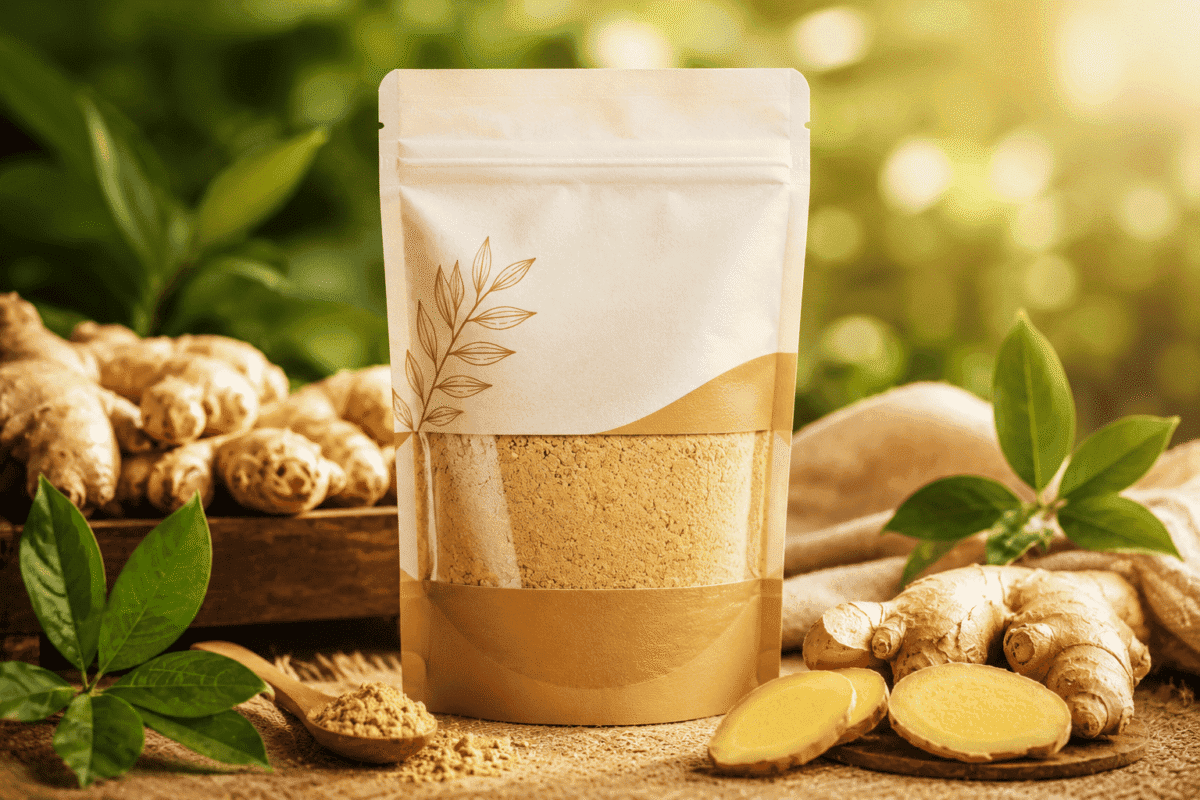
Since 1994, Alpha Organic Foods has remained a cornerstone in the global export of high-quality botanicals. Our commitment to purity and traditional processing ensures that every batch of dry ginger powder meets the rigorous standards required for international distribution. When we source ginger, we aren’t just looking for a spice; we are looking for the concentrated essence of the Zingiber officinale rhizome, preserved through meticulous dehydration.
Understanding the Depth of Ground Ginger
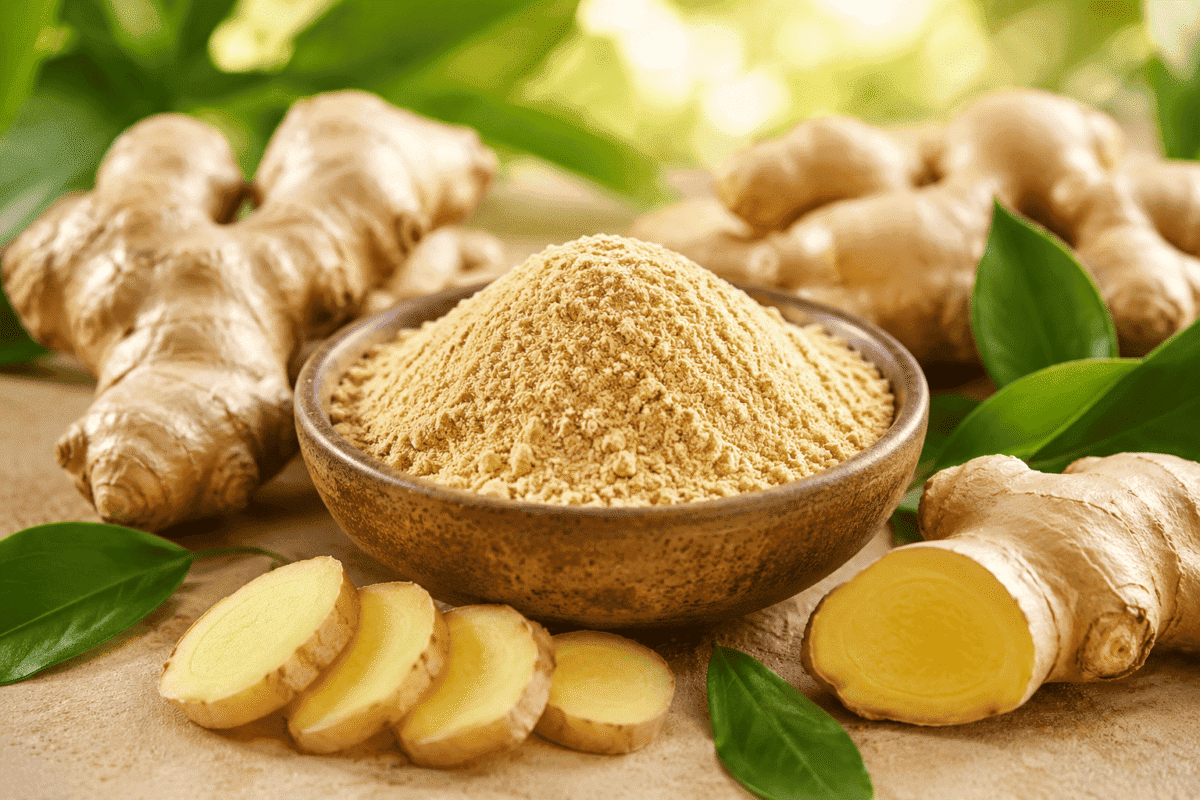
Many consumers often ask if ground ginger is the same as ginger powder. In the world of professional spice grading, they are essentially synonymous, yet the quality varies drastically based on the origin and drying process. Ground ginger powder is the result of cleaning, drying, and pulverising the root. At Alpha Organic Foods, our dry ginger powder (known as Sonth in Hindi) is prized for its warm, spicy aroma and sharp flavour profile that fresh ginger sometimes lacks in its raw state.
The Science of Dehydration
The debate of ginger powder vs. fresh ginger often comes down to chemical composition. While fresh ginger contains high levels of gingerol, the drying process used to create organic ginger powder converts much of that gingerol into shogaols. Shogaols are more pungent and are currently being studied for their heightened bioactive properties. This makes the dry ginger powder benefits particularly unique for those looking for a more shelf-stable, concentrated alternative to the fresh root.
For those in the culinary and manufacturing sectors, the ginger fresh-to-powder conversion is a vital metric. Generally, $1$ tablespoon of fresh grated ginger is equivalent to $1/4$ teaspoon of ground ginger powder. This potency is why organic ginger powder is a staple in everything from industrial-scale ginger tea powder production to high-end botanical exports.
Why Quality Matters in Export
Whether you are sourcing ginger powder at Walmart, Woolworths, or looking for a 1 kg price for ginger powder for wholesale, the “Alpha Organicfoods” difference lies in our history. Operating since 1994, we understand that “sand ginger powder” and “root powder” require different handling to maintain volatile oil content. True organic ginger powder should be free from anti-caking agents and fillers, maintaining its pale-yellow hue and biting fragrance.
Conclusion
Choosing the right ginger root powder is about more than just flavour; it is about trusting a legacy of quality. Alpha Organic Foods continues to bridge the gap between traditional farming and modern export requirements, ensuring that the integrity of the ginger remains intact from the field to the final package.
Frequently Asked Questions
- Is ginger powder as good as fresh ginger?
Both have unique profiles. Powdered ginger is more concentrated in shogaols, making it more pungent and better for baking or long-term storage, while fresh ginger has higher gingerol content.
- What is the Hindi name for ginger powder?
In Hindi, dry ginger powder is commonly referred to as Sonth.
- Is ground ginger the same as ginger powder?
Yes, “ground ginger” and “ginger powder” are different terms for the same product: dehydrated ginger root that has been milled into a fine dust.
- How do I substitute fresh ginger for powder?
Use a ratio of $1$ unit of powder to $6$ units of fresh. For example, $1/2$ teaspoon of ginger powder replaces about $1$ tablespoon of fresh minced ginger.
- How has Alpha Organic maintained its quality since 1994?
By adhering to strict organic certification standards and utilising low-temperature drying techniques that preserve the essential oils and bioactive compounds of the ginger root.