dry mango powder new image (5)

How to Evaluate and Audit a Dry Mango Powder Supplier Before International Purchase

Introduction

In global sourcing of dry mango powder, choosing the right supplier is critical. A wrong decision can lead to quality failures, shipment rejections, financial loss, and brand damage.

International buyers do not rely on claims alone; they follow a structured supplier evaluation and audit process that includes factory inspections, certification verification, and traceability checks.

This guide explains how importers professionally evaluate suppliers before placing bulk orders.

Why Supplier Evaluation Is Essential

Before entering any international contract, buyers must minimize risk.

Key Risks in Supplier Selection

  • Inconsistent product quality
  • Fake or expired certifications
  • Poor hygiene and processing standards
  • Lack of traceability
  • Unreliable delivery performance

A proper audit helps ensure long term reliability and compliance.

Step 1: Initial Supplier Screening

Before a physical audit, buyers conduct a basic evaluation.

What Buyers Check First

  • Company profile and export experience
  • Product range and specialization
  • Export markets served (USA, EU, GCC)
  • Client references or testimonials

Red Flags

  • No export history
  • Limited documentation
  • Unclear communication

Step 2: Factory Audit and Inspection

Factory inspection is one of the most critical steps in supplier evaluation.

Infrastructure Assessment

Buyers check:

  • Processing facility condition
  • Equipment quality and maintenance
  • Cleanliness and hygiene standards

Production Process Review

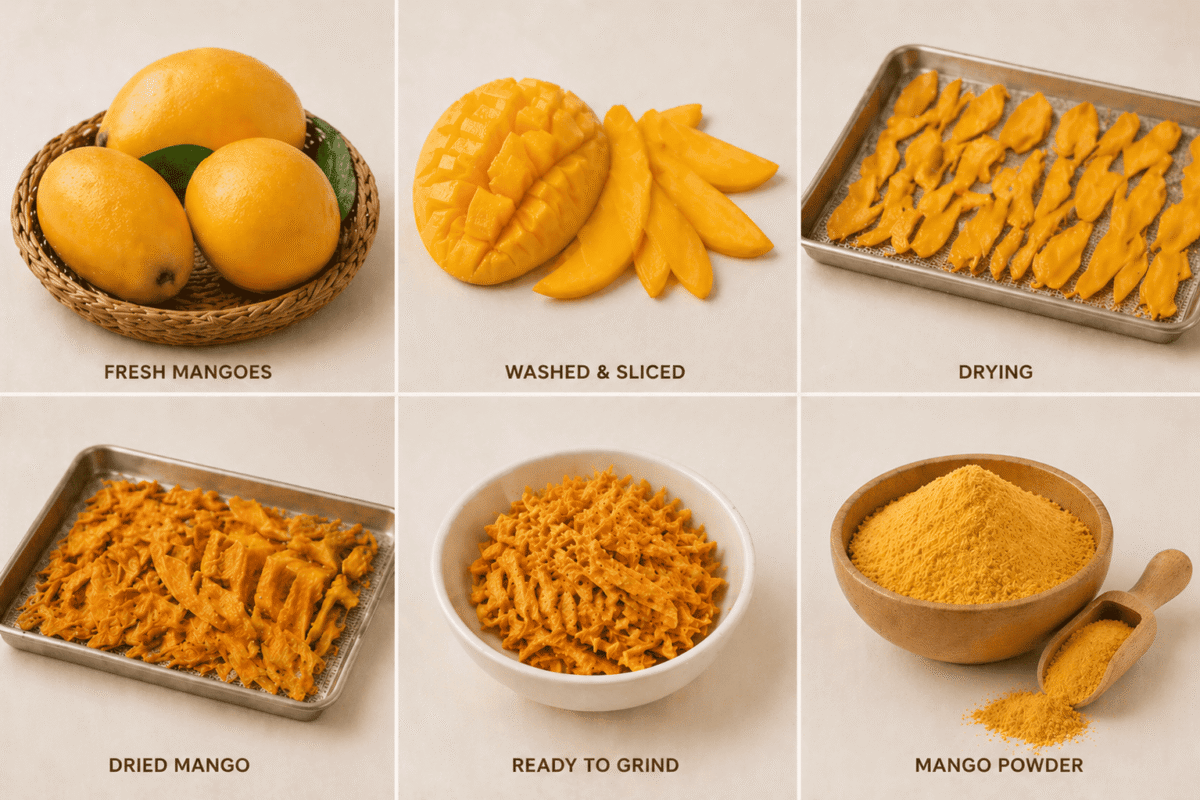
  • Washing and sorting of raw mangoes
  • Drying method (sun-dried vs mechanical)
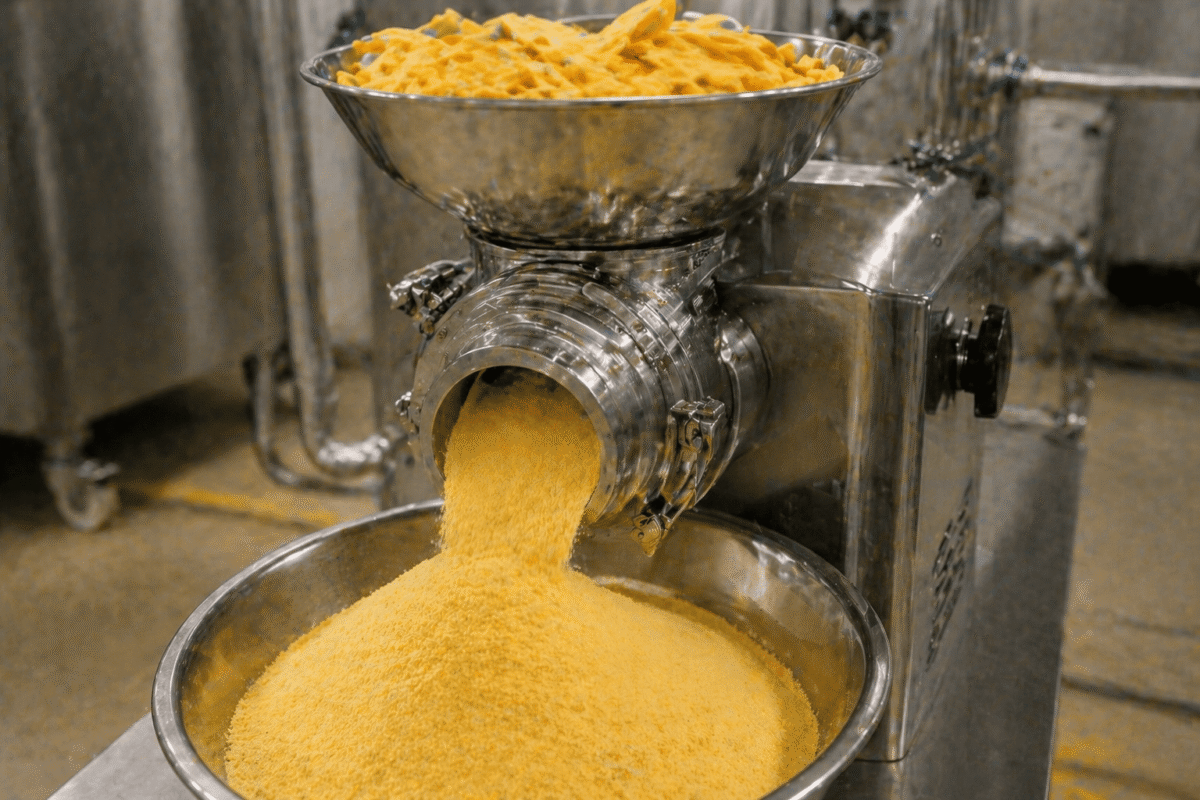
  • Grinding and sieving process
  • Packaging system

Hygiene and Safety Checks

  • Worker hygiene practices
  • Pest control systems
  • Waste management procedures

A professional setup increases buyer confidence significantly.

Step 3: Quality Control Systems

A reliable supplier must have strong quality control procedures.

Internal Quality Checks

  • Batch testing for every production cycle
  • Moisture content monitoring (≤10%)
  • Color and texture consistency

Laboratory Testing

Buyers may request:

  • Third-party lab reports
  • Microbial testing results
  • Heavy metal analysis

Documentation

  • Quality control reports
  • Batch records
  • Testing certificates

Step 4: Certification Verification

Certifications are essential for international approval.

Mandatory Certifications

  • HACCP (Food Safety System)
  • ISO 22000
  • Food safety compliance for target markets

Additional Certifications

  • Halal certification (Middle East)
  • Organic certification (if applicable)
  • Kosher certification

Verification Process

Buyers:

  • Check certificate validity
  • Verify issuing authority
  • Confirm audit dates

Fake or expired certificates are a major red flag.

Step 5: Traceability System Check

Traceability is critical in modern food supply chains.

What Traceability Means

The ability to track product from:

  • Raw mango sourcing
  • Processing batch
  • Final shipment

What Buyers Expect

  • Batch coding system
  • Raw material sourcing records
  • Production logs
  • Packaging traceability

This ensures accountability in case of quality issues.

Step 6: Sample Testing and Validation

Even after audits, product testing is mandatory.

Sample Evaluation Criteria

  • Color (natural yellow-brown)
  • Aroma (fresh and sour)
  • Texture (fine and uniform)
  • Taste (balanced acidity)

Lab Testing Parameters

  • Moisture level
  • Microbial safety
  • Adulteration check

Buyers compare multiple suppliers before final selection.

Step 7: Supply Chain and Capacity Evaluation

Buyers assess whether the supplier can handle long-term demand.

Key Factors

  • Monthly production capacity
  • Raw material availability
  • Storage facilities
  • Backup supply systems

Why It Matters

A supplier may pass quality checks but fail to meet volume requirements.

Step 8: Packaging and Logistics Audit

Packaging quality directly affects product safety.

Packaging Checks

  • Food-grade materials
  • Moisture-proof sealing
  • Proper labeling (batch, expiry, origin)

Logistics Capability

  • Experience with export documentation
  • Shipping coordination
  • On-time delivery record

Step 9: Trial Order Before Full Contract

Most importers do not directly place large orders.

Trial Order Purpose

  • Verify actual shipment quality
  • Test supplier reliability
  • Evaluate logistics performance

Typical trial order:

  • 500 kg – 2 tons

Only after successful delivery do buyers proceed to long-term contracts.

Key Audit Checklist Summary

Buyers typically evaluate suppliers based on:

  • Factory hygiene and infrastructure
  • Quality control systems
  • Certifications and compliance
  • Traceability systems
  • Sample quality
  • Production capacity
  • Packaging and logistics capability

Common Mistakes Buyers Should Avoid

  1. Skipping Factory Audit

Leads to unexpected quality issues.

  1. Trusting Documents Without Verification

Fake certifications are common in global trade.

  1. Ignoring Traceability

Creates risk in case of product recalls.

  1. Not Testing Samples Properly

Leads to mismatch between sample and shipment.

How Suppliers Can Prepare for Audits

To pass international audits, suppliers should:

  • Maintain clean and organized facilities
  • Keep certifications updated
  • Implement strong quality control systems
  • Ensure full traceability documentation
  • Train staff on hygiene and safety standards

Professional preparation increases chances of approval.

Conclusion

Evaluating and auditing a dry mango powder supplier is a critical step in international procurement. Buyers must go beyond price and focus on factory conditions, certifications, traceability, and quality systems.

A structured audit process reduces risk and ensures long term supply reliability. Suppliers who meet these standards can build strong global partnerships and secure consistent export growth.

FAQs

  1. Why is supplier auditing important?

It ensures product quality, safety, and reliability before bulk purchasing.

  1. What is the most important audit factor?

Factory hygiene and quality control systems are the most critical.

  1. How do buyers verify certifications?

By checking issuing authorities and validity dates.

  1. What is traceability in food export?

Tracking product from raw material to final shipment.

  1. Do buyers always conduct factory audits?

Yes, especially for long-term or high volume contracts.

  1. What is a trial order?

A small shipment used to test supplier performance.

  1. How can suppliers improve audit success?

By maintaining compliance, documentation, and consistent quality systems. 
How Payment Terms Work in Global Dry Mango Powder Trade (LC, TT, Advance, Credit Terms)

Introduction

In the international trade of dry mango powder, payment terms are just as important as price and quality. They define how money moves between buyer and seller, who carries financial risk, and how trust is built over time.

Global transactions involve distance, currency differences, and legal complexities. That’s why structured payment methods like Letter of Credit (LC), Telegraphic Transfer (TT), advance payment, and credit terms are widely used to ensure secure and reliable trade.

Understanding these payment systems helps both exporters and importers minimize risk and build long-term business relationships.

Why Payment Terms Matter in Export Trade

Payment terms directly impact:

  • Financial security of both parties
  • Cash flow management
  • Risk exposure in international transactions
  • Speed of deal execution

A poorly structured payment agreement can lead to:

  • Delayed payments
  • Shipment disputes
  • Financial losses

Common Payment Methods in Dry Mango Powder Trade

  1. Letter of Credit (LC)

What is LC?

A Letter of Credit is a bank guarantee that ensures the seller gets paid once all contract conditions are met.

How It Works

  • Buyer opens LC through their bank
  • Seller ships goods and submits documents
  • Bank verifies documents
  • Payment is released to seller

Key Advantages

  • High security for both parties
  • Reduces risk of non-payment
  • Suitable for large transactions

Limitations

  • Bank charges are higher
  • Documentation must be perfect
  • Processing time can be longer

Best For

  • First-time transactions
  • High-value bulk orders (10+ tons)
  1. Telegraphic Transfer (TT)

What is TT?

TT is a direct bank transfer from buyer to seller.

Common TT Structures

  • 30% advance + 70% before shipment
  • 50% advance + 50% after production
  • 100% advance (for small orders)

Advantages

  • Fast and simple process
  • Lower bank charges than LC
  • Flexible structure

Risks

  • Seller risk if balance is delayed
  • Buyer risk if paying full advance

Best For

  • Trusted relationships
  • Medium-sized transactions
  1. Advance Payment

What is Advance Payment?

The buyer pays the full amount before shipment.

Advantages for Seller

  • Zero payment risk
  • Immediate working capital

Risks for Buyer

  • Risk of non-delivery
  • Dependency on supplier trust

Best For

  • Small trial orders
  • New product testing
  1. Credit Terms (Open Account)

What are Credit Terms?

Seller ships goods first and buyer pays later (e.g., 30, 60, or 90 days).

Advantages for Buyer

  • Improved cash flow
  • Lower upfront investment

Risks for Seller

  • High risk of delayed or non-payment

Best For

  • Long-term trusted partners
  • Large distributors and retailers

Financial Security in Payment Terms

Each payment method offers a different level of financial security.

High Security

  • Letter of Credit (LC)
  • Advance Payment

Medium Security

  • TT (partial advance structure)

Low Security

  • Credit terms (Open Account)

The choice depends on:

  • Trust level
  • Order size
  • Business relationship history

Buyer-Seller Trust Models

Trust evolves over time in international trade.

Stage 1: New Relationship

  • Advance payment or LC
  • Strict documentation requirements

Stage 2: Developing Trust

  • TT with partial advance
  • Flexible negotiation

Stage 3: Established Partnership

  • Credit terms
  • Long-term contracts

Strong relationships often shift from secure payment methods to flexible terms.

Payment Terms and Order Size Relationship

Payment structure often depends on order volume.

Small Orders (100  -500 kg)

  • 100% advance
  • TT payment

Medium Orders (1  -5 tons)

  • 30  -50% advance
  • Balance before shipment

Large Orders (10+ tons)

  • LC or structured TT
  • Sometimes partial credit

Role of Banks and Documentation

Banks play a key role in secure international transactions.

Key Documents Required

  • Commercial invoice
  • Packing list
  • Bill of lading
  • Certificate of origin
  • Quality certificates

For LC transactions, even minor errors can delay payment.

Currency and Payment Risk

International payments involve currency risk.

Common Trading Currencies

  • US Dollar (USD)
  • Euro (EUR)
  • UAE Dirham (AED)

Risk Factors

  • Exchange rate fluctuations
  • Delayed payments affecting conversion rates

Exporters often:

  • Price in USD
  • Include currency buffers
  • Negotiate fixed-rate contracts

Common Payment Mistakes in Export Trade

  1. Accepting Risky Credit Terms Too Early

New suppliers may face non-payment issues.

  1. Poor Documentation in LC

Leads to payment delays or rejection.

  1. Lack of Clear Payment Agreement

Causes disputes between buyer and seller.

  1. Ignoring Currency Fluctuations

Impacts profit margins significantly.

Best Practices for Secure Payment Handling

For Exporters

  • Start with advance or LC
  • Verify buyer credibility
  • Maintain proper documentation
  • Use bank-backed payment methods

For Importers

  • Work with verified suppliers
  • Use LC for high-value deals
  • Negotiate balanced payment terms
  • Ensure contract clarity

Conclusion

Payment terms are the backbone of global dry mango powder trade. They define financial security, trust, and transaction efficiency between buyers and sellers.

From high-security methods like LC to flexible credit terms, each payment structure serves a specific purpose based on relationship strength and order size. Businesses that manage payment risks effectively are more likely to build long term, successful international partnerships.

FAQs

  1. What is the safest payment method in export trade?

Letter of Credit (LC) is considered the safest for both buyer and seller.

  1. What is the most common payment method?

TT (Telegraphic Transfer) is widely used due to flexibility and speed.

  1. When is advance payment used?

For small orders or new business relationships.

  1. What are credit terms in export trade?

Payment made after delivery, usually within 30  -90 days.

  1. Why is LC expensive?

Because it involves bank guarantees and documentation verification.

  1. How do exporters reduce payment risk?

By using LC, advance payments, and verifying buyer credibility.

  1. Can payment terms change over time?

Yes, as trust builds, terms become more flexible. 

alpha mango power

How International Bulk Dry Mango Powder Contracts Are Structured (FOB, CIF, EXW Explained)

Introduction

In the global trade of dry mango powder, pricing and product quality are only part of the deal. The structure of the contract, especially the trade terms (Incoterms),  plays a critical role in defining who controls logistics, who bears risk, and who pays for what.

Terms like FOB, CIF, and EXW are commonly used in international contracts. For exporters and importers, understanding these terms is essential to avoid disputes, manage costs, and ensure smooth shipments.

What Are Incoterms in Export Contracts?

Incoterms (International Commercial Terms) are standardized trade terms used globally to define:

  • Responsibility for shipping
  • Risk ownership during transit
  • Cost distribution between buyer and seller
  • Delivery point of goods

These terms are set by the International Chamber of Commerce (ICC) and are widely used in food ingredient trade, including dry mango powder.

Why Contract Structure Matters in Bulk Trade

Bulk shipments (5-25 tons or more) involve multiple risks:

  • Transportation damage
  • Delays at ports
  • Customs clearance issues
  • Cost fluctuations

A clearly defined contract ensures:

  • Transparency in responsibilities
  • Reduced disputes
  • Better logistics planning

EXW (Ex Works): Minimum Responsibility for Seller

What EXW Means

Under EXW, the seller makes goods available at their factory or warehouse. The buyer handles everything else.

Seller Responsibilities

  • Product manufacturing
  • Packaging
  • Making goods ready for pickup

Buyer Responsibilities

  • Inland transportation
  • Export clearance
  • Freight booking
  • Insurance
  • Import clearance

Risk Ownership

Risk transfers to the buyer as soon as goods leave the seller’s premises.

When EXW Is Used

  • Experienced importers with strong logistics networks
  • Buyers wanting full control over shipping

FOB (Free on Board): Most Common Export Term

What FOB Means

Under FOB, the seller delivers goods to the port and loads them onto the shipping vessel.

Seller Responsibilities

  • Production and packaging
  • Inland transport to port
  • Export documentation
  • Port handling charges
  • Loading onto vessel

Buyer Responsibilities

  • Ocean freight
  • Insurance
  • Import clearance
  • Delivery to final destination

Risk Ownership

Risk transfers when goods are loaded onto the ship.

Why FOB Is Popular

  • Balanced responsibility between buyer and seller
  • Clear cost structure
  • Preferred by most international buyers

CIF (Cost, Insurance, Freight): Seller Handles Shipping

What CIF Means

Under CIF, the seller handles shipping and insurance up to the destination port.

Seller Responsibilities

  • Production and packaging
  • Export clearance
  • Ocean freight
  • Insurance coverage

Buyer Responsibilities

  • Import clearance
  • Local transportation
  • Duties and taxes

Risk Ownership

Risk still transfers at the port of origin, even though the seller pays for freight and insurance.

When CIF Is Used

  • Buyers with limited logistics experience
  • Smaller importers or new market entrants

Key Differences Between FOB, CIF, and EXW

Control Over Logistics

  • EXW: Buyer has full control
  • FOB: Shared control
  • CIF: Seller manages shipping

Cost Responsibility

  • EXW: Buyer pays most costs
  • FOB: Shared cost structure
  • CIF: Seller covers major shipping costs

Risk Transfer Point

  • EXW: At seller’s warehouse
  • FOB: At loading port
  • CIF: At loading port (despite seller paying freight)

Choosing the Right Contract Term

The choice depends on several factors:

Buyer Experience

  • New buyers prefer CIF
  • Experienced buyers prefer FOB or EXW

Logistics Capability

  • Strong logistics → EXW or FOB
  • Limited logistics → CIF

Cost Strategy

  • Buyers may reduce costs by managing freight themselves
  • Sellers may offer competitive CIF pricing with logistics partnerships

Role of Risk Ownership in Contracts

Understanding risk transfer is critical in international trade.

Common Risks in Dry Mango Powder Trade

  • Moisture damage
  • Delayed shipments
  • Container contamination
  • Port congestion

Importance of Insurance

Even in CIF contracts:

  • Insurance coverage may be limited
  • Buyers often purchase additional insurance

Logistics Control and Supply Chain Efficiency

Under EXW

Buyer controls:

  • Shipping schedules
  • Freight rates
  • Carrier selection

Under FOB

Shared control ensures:

  • Better coordination
  • Balanced risk

Under CIF

Seller controls:

  • Freight booking
  • Shipping timeline
  • Insurance arrangement

However, buyers have less visibility and flexibility.

Payment Terms Linked to Contract Structure

Trade terms often align with payment methods:

Common Payment Methods

  • Letter of Credit (LC)
  • Telegraphic Transfer (TT)
  • Documents Against Payment (DP)

Risk Consideration

  • EXW: Higher risk for buyer
  • CIF: Higher responsibility for seller
  • FOB: Balanced risk

Common Mistakes in Contract Structuring

  1. Misunderstanding Risk Transfer

Many buyers assume CIF means the seller bears all risk, which is incorrect.

  1. Ignoring Hidden Costs

EXW may seem cheaper but includes hidden logistics costs.

  1. Weak Documentation

Incomplete contracts lead to disputes in case of damage or delays.

  1. No Insurance Clarity

Unclear insurance terms create financial losses.

Best Practices for Exporters and Importers

For Exporters

  • Clearly define Incoterms in contracts
  • Provide transparent cost breakdowns
  • Partner with reliable logistics providers

For Importers

  • Understand risk transfer points
  • Choose terms based on logistics capability
  • Verify insurance coverage

Conclusion

International bulk contracts for dry mango powder rely heavily on trade terms like FOB, CIF, and EXW. These terms define cost responsibility, logistics control, and risk ownership throughout the supply chain.

Choosing the right contract structure is essential for smooth transactions, cost efficiency, and risk management. Both exporters and importers must clearly understand these terms to build successful long term trade relationships.

FAQs

  1. What is the most commonly used trade term?

FOB (Free on Board) is the most commonly used term in dry mango powder export.

  1. Which term gives maximum control to the buyer?

EXW gives full control to the buyer over logistics and shipping.

  1. Does CIF include insurance?

Yes, but usually with limited coverage provided by the seller.

  1. When does risk transfer in FOB?

When goods are loaded onto the ship at the port of origin.

  1. Is EXW cheaper than CIF?

EXW appears cheaper but may include hidden logistics costs for the buyer.

  1. Which term is best for new importers?

CIF is generally preferred by new importers due to ease of logistics.

  1. Why are Incoterms important?

They define responsibilities, reduce disputes, and ensure smooth international trade.

power

Minimum Order Quantity (MOQ) Expectations in Dry Mango Powder Export Industry

Introduction

In the global trade of dry mango powder, the Minimum Order Quantity (MOQ) is a key factor that shapes buyer-supplier relationships. MOQ determines the smallest quantity a supplier is willing to sell and plays a major role in pricing, logistics, and profitability.

For new exporters, MOQ can act as a barrier to entry, while for large buyers, it ensures cost efficiency and supply consistency. Understanding how MOQ works across different buyer segments is essential for scaling in international markets.

What is MOQ in Export Trade?

MOQ (Minimum Order Quantity) is the minimum volume of product a supplier requires per order.

In dry mango powder export, the MOQ is influenced by:

  • Production capacity
  • Processing cost efficiency
  • Packaging setup
  • Shipping economics

MOQ is not fixed globally; it varies depending on the supplier’s scale and the buyer’s requirements.

Typical MOQ Ranges in Dry Mango Powder Industry

Small-Scale Orders (Entry Level)

  • 100 kg – 500 kg
  • Usually for sample testing or small distributors

Medium Bulk Orders

  • 500 kg – 2 tons
  • Common for trial shipments by importers

Standard Export MOQ

  • 3 -10 tons
  • Preferred by most exporters for profitability

Large Bulk Contracts

  • 10 – 25+ tons per shipment
  • Used by large food manufacturers and distributors

MOQ often aligns with container optimization, especially 20-ft containers.

Why MOQ Exists in Export Business

MOQ is not just a sales condition, it is a business necessity.

  1. Production Efficiency

Processing small quantities increases per-unit cost due to:

  • Fixed labor expenses
  • Machine setup costs
  • Energy consumption
  1. Packaging Costs

Custom packaging setups require:

  • Printing plates
  • Labeling systems
  • Bag preparation

These costs are only viable at higher volumes.

  1. Logistics Optimization

Shipping smaller quantities leads to:

  • Higher freight cost per kg
  • Inefficient container usage

MOQ ensures better cost distribution across shipments.

Entry Barriers Created by MOQ

MOQ can be a major challenge for new buyers and small importers.

Financial Barrier

Large MOQs require higher upfront investment.

Storage Limitation

Small buyers may lack warehouse capacity for bulk orders.

Risk Exposure

New importers hesitate to commit large volumes without testing supplier reliability.

Buyer Segmentation Based on MOQ

Different buyers have different MOQ expectations depending on their business scale.

Small Importers and Startups

  • Prefer low MOQ (100-500 kg)
  • Focus on testing product quality
  • Often buy through traders or distributors

Medium-Sized Distributors

  • Order 1-5 tons
  • Focus on regional distribution
  • Balance between cost and flexibility

Large Food Manufacturers

  • Require 10-25+ tons
  • Focus on long-term contracts
  • Demand consistent supply

Retail Brands and Private Labels

  • MOQ depends on packaging type
  • Usually 500 kg – 3 tons

MOQ and Pricing Relationship

MOQ directly affects pricing structure.

Lower MOQ = Higher Price per kg

Because:

  • Fixed costs are distributed over smaller quantity
  • Logistics cost per unit increases

Higher MOQ = Lower Price per kg

Due to:

  • Economies of scale
  • Better production efficiency
  • Optimized shipping cost

Price difference between low MOQ and bulk MOQ can range from 10% to 25%.

Role of MOQ in Scalability

MOQ plays a crucial role in business growth.

For Exporters

  • Larger MOQ increases production efficiency
  • Improves profit margins
  • Enables better capacity utilization

For Buyers

  • Bulk purchasing reduces cost
  • Ensures consistent supply
  • Supports expansion into new markets

Scaling in export markets often means gradually increasing order quantities.

Flexible MOQ Strategies Used by Exporters

To attract different buyers, exporters offer flexible MOQ models:

  1. Trial MOQ
  • Low quantity for first-time buyers
  • Builds trust before bulk orders
  1. Mixed Container Orders
  • Multiple products in one shipment
  • Reduces MOQ pressure
  1. Tier-Based Pricing
  • Different prices for different quantity levels
  1. Long-Term Contracts
  • Lower MOQ with commitment agreements

MOQ and Container Optimization

Shipping efficiency is closely linked to MOQ.

20-ft Container Capacity

  • Approximately 10-15 tons depending on packaging

Benefits of Full Container Load (FCL)

  • Lower freight cost per kg
  • Reduced risk of contamination
  • Faster transit handling

Less than Container Load (LCL)

  • Used for small MOQs
  • Higher cost and handling risk

Common Mistakes Related to MOQ

  1. Setting MOQ Too High

Can drive away potential buyers, especially new importers.

  1. Offering Too Low MOQ

Leads to reduced profitability and operational inefficiency.

  1. Ignoring Buyer Segmentation

Different buyers require different MOQ strategies.

  1. Not Aligning MOQ with Logistics

Results in increased shipping cost and delays.

How Exporters Can Optimize MOQ Strategy

To succeed globally, exporters should:

  • Offer flexible MOQ for new clients
  • Align MOQ with container capacity
  • Use tier-based pricing models
  • Focus on long-term volume contracts
  • Balance profitability with market access

A well-structured MOQ strategy helps attract both small and large buyers.

Conclusion

Minimum Order Quantity (MOQ) is a critical element in the dry mango powder export industry. It influences pricing, logistics efficiency, and buyer accessibility.

While MOQ can act as a barrier for new entrants, it also enables scalability and cost optimization for established businesses. Exporters who balance flexibility with efficiency can capture a wider market and build long-term international partnerships.

FAQs

  1. What is the typical MOQ for dry mango powder export?

It usually ranges from 500 kg to 10 tons depending on the supplier.

  1. Why do exporters set MOQ?

To ensure production efficiency, cost optimization, and profitable operations.

  1. Can new buyers negotiate MOQ?

Yes, many exporters offer lower MOQ for trial orders.

  1. How does MOQ affect pricing?

Lower MOQ results in higher per-unit cost, while bulk orders reduce price.

  1. What is the best MOQ for beginners?

Around 100  -500 kg for testing product quality.

  1. How does MOQ relate to shipping?

Higher MOQ allows full container shipping, reducing logistics cost.

  1. Can MOQ change over time?

Yes, as business relationships grow, MOQ terms can become more flexible.

mango

How Global Dry Mango Powder Prices Are Determined and Updated in Export Markets

Introduction

The pricing of dry mango powder in international markets is not fixed. It continuously changes based on multiple global and local factors such as raw material availability, currency exchange rates, and supply chain dynamics.

For exporters and importers, understanding how prices are determined helps in better negotiation, contract planning, and long-term profitability. Unlike simple commodities, dry mango powder pricing involves both agricultural and industrial cost components.

Core Factors That Determine Export Prices

Global prices of dry mango powder are influenced by three major pillars:

  • Raw material cost (mango sourcing)
  • Currency exchange fluctuations
  • Supply chain and logistics costs

These factors together create the final FOB (Free on Board) or CIF (Cost, Insurance, Freight) export price.

Raw Material Cost: The Primary Price Driver

Mango Harvest Impact

The cost of raw mangoes directly affects powder pricing.

  • High mango production → Lower prices
  • Low harvest or crop damage → Higher prices

Seasonal variations in mango supply can cause 10-30% price fluctuations annually.

Quality of Raw Mango

Premium varieties used for export-grade powder are more expensive.

Factors include:

  • Variety type
  • Ripeness level
  • Pulp quality
  • Fiber content

Higher-quality mangoes produce better powder, increasing overall cost.

Processing and Production Costs

After sourcing raw mangoes, processing adds another layer to pricing.

Key Cost Components

  • Washing and peeling
  • Slicing and drying (sun-dried or dehydrated)
  • Grinding and sieving
  • Labor costs
  • Energy consumption

Technology Impact

Advanced dehydration systems increase cost but improve:

  • Color retention
  • Shelf life
  • Consistency

This results in higher export prices for premium-grade powder.

Currency Exchange Rate Impact

Currency fluctuations play a major role in international pricing.

How Currency Affects Export Prices

  • If local currency weakens → Export becomes cheaper for buyers
  • If local currency strengthens → Export becomes expensive

For example:

  • Pakistani Rupee (PKR) vs US Dollar (USD)
  • Indian Rupee (INR) vs Euro (EUR)

Even a 5  -10% currency shift can significantly impact contract pricing.

Pricing Strategy Based on Currency

Exporters often:

  • Quote prices in USD
  • Adjust rates monthly or quarterly
  • Add buffers to protect against volatility

Supply Chain and Logistics Costs

Global logistics heavily influence final pricing.

Key Cost Elements

  • Inland transportation
  • Packaging materials
  • Container freight charges
  • Port handling fees
  • Insurance

Shipping Cost Fluctuations

Freight rates can vary due to:

  • Fuel prices
  • Global trade disruptions
  • Container shortages

During high-demand periods, logistics costs can increase by 20  -50%, directly affecting export prices.

Demand and Supply Dynamics

Market demand also plays a crucial role in price updates.

High Demand Periods

  • Ramadan season (Middle East)
  • Winter food production (Europe)
  • Product launch cycles (USA)

During peak demand:

  • Prices increase due to bulk orders
  • Suppliers may prioritize long-term buyers

Low Demand Periods

  • Prices stabilize or decrease
  • Buyers negotiate better deals
  • Exporters offer discounts to maintain volume

Quality Grade and Pricing Differences

Different grades of dry mango powder have different price levels.

Premium Grade

  • Highest price
  • Used by global food brands
  • Strict quality standards

Standard Grade

  • Moderate pricing
  • Used in general food manufacturing

Industrial Grade

  • Lowest price
  • Used for bulk processing and blending

Price differences between grades can range from 15% to 40%.

Contract Types and Price Stability

Spot Pricing

  • Short-term deals
  • Prices fluctuate based on market conditions

Long-Term Contracts

  • Fixed or semi-fixed pricing
  • Protection from sudden price spikes

Many international buyers prefer 6-12 month contracts to manage risk.

Role of Export Documentation and Compliance Costs

Compliance also affects pricing.

Additional Cost Factors

  • Certification fees (HACCP, ISO)
  • Lab testing charges
  • Export documentation
  • Quality inspections

These costs are included in final export pricing, especially for premium markets like the EU and USA.

How Prices Are Updated in Export Markets

Export prices are not static; they are reviewed regularly.

Common Update Cycles

  • Monthly price revisions
  • Quarterly contract adjustments
  • Seasonal pricing updates

Factors Triggering Price Changes

  • New mango harvest season
  • Currency fluctuations
  • Freight rate changes
  • Demand spikes

Exporters communicate updated prices to buyers through:

  • Proforma invoices
  • Contract amendments
  • Market updates

Typical Price Structure Example

A simplified export price structure includes:

  • Raw mango cost: 40  -50%
  • Processing cost: 20  -25%
  • Packaging: 5  -10%
  • Logistics: 15  -25%
  • Margin: 5  -15%

This structure varies depending on market conditions and product grade.

Common Pricing Mistakes Exporters Make

  1. Ignoring Currency Risk

Leads to profit loss in long-term contracts.

  1. Underestimating Logistics Costs

Freight fluctuations can reduce margins significantly.

  1. Inconsistent Pricing Strategy

Frequent unexplained price changes reduce buyer trust.

  1. Overpricing Without Value Justification

Buyers compare global suppliers before finalizing deals.

How Exporters Can Optimize Pricing Strategy

To stay competitive, exporters should:

  • Monitor raw material trends closely
  • Track currency movements regularly
  • Build strong logistics partnerships
  • Offer flexible pricing models
  • Maintain transparency with buyers

A data-driven pricing approach increases both profitability and long-term client retention.

Conclusion

Global dry mango powder pricing is influenced by a combination of agricultural, financial, and logistical factors. Raw material cost, currency exchange rates, and supply chain dynamics are the key drivers behind price fluctuations.

For exporters, success depends on understanding these variables and adapting pricing strategies accordingly. Companies that manage costs effectively and communicate transparently with buyers are more likely to succeed in competitive international markets.

FAQs

  1. What is the main factor affecting dry mango powder prices?

Raw mango cost is the biggest factor influencing overall pricing.

  1. How do currency rates impact export pricing?

Currency fluctuations can increase or decrease export competitiveness globally.

  1. Why do prices change during the year?

Due to seasonal mango supply, demand cycles, and logistics cost variations.

  1. Which grade has the highest price?

Premium export-grade dry mango powder has the highest price.

  1. How often are export prices updated?

Typically monthly or quarterly depending on market conditions.

  1. Do logistics costs significantly affect pricing?

Yes, especially during global shipping disruptions or peak seasons.

  1. How can exporters manage price fluctuations?

By using long term contracts, monitoring costs, and adjusting pricing strategies regularly.