
Introduction
In global sourcing of dry mango powder, choosing the right supplier is critical. A wrong decision can lead to quality failures, shipment rejections, financial loss, and brand damage.
International buyers do not rely on claims alone; they follow a structured supplier evaluation and audit process that includes factory inspections, certification verification, and traceability checks.
This guide explains how importers professionally evaluate suppliers before placing bulk orders.
Why Supplier Evaluation Is Essential
Before entering any international contract, buyers must minimize risk.
Key Risks in Supplier Selection
- Inconsistent product quality
- Fake or expired certifications
- Poor hygiene and processing standards
- Lack of traceability
- Unreliable delivery performance
A proper audit helps ensure long term reliability and compliance.
Step 1: Initial Supplier Screening
Before a physical audit, buyers conduct a basic evaluation.
What Buyers Check First
- Company profile and export experience
- Product range and specialization
- Export markets served (USA, EU, GCC)
- Client references or testimonials
Red Flags
- No export history
- Limited documentation
- Unclear communication
Step 2: Factory Audit and Inspection
Factory inspection is one of the most critical steps in supplier evaluation.
Infrastructure Assessment
Buyers check:
- Processing facility condition
- Equipment quality and maintenance
- Cleanliness and hygiene standards
Production Process Review
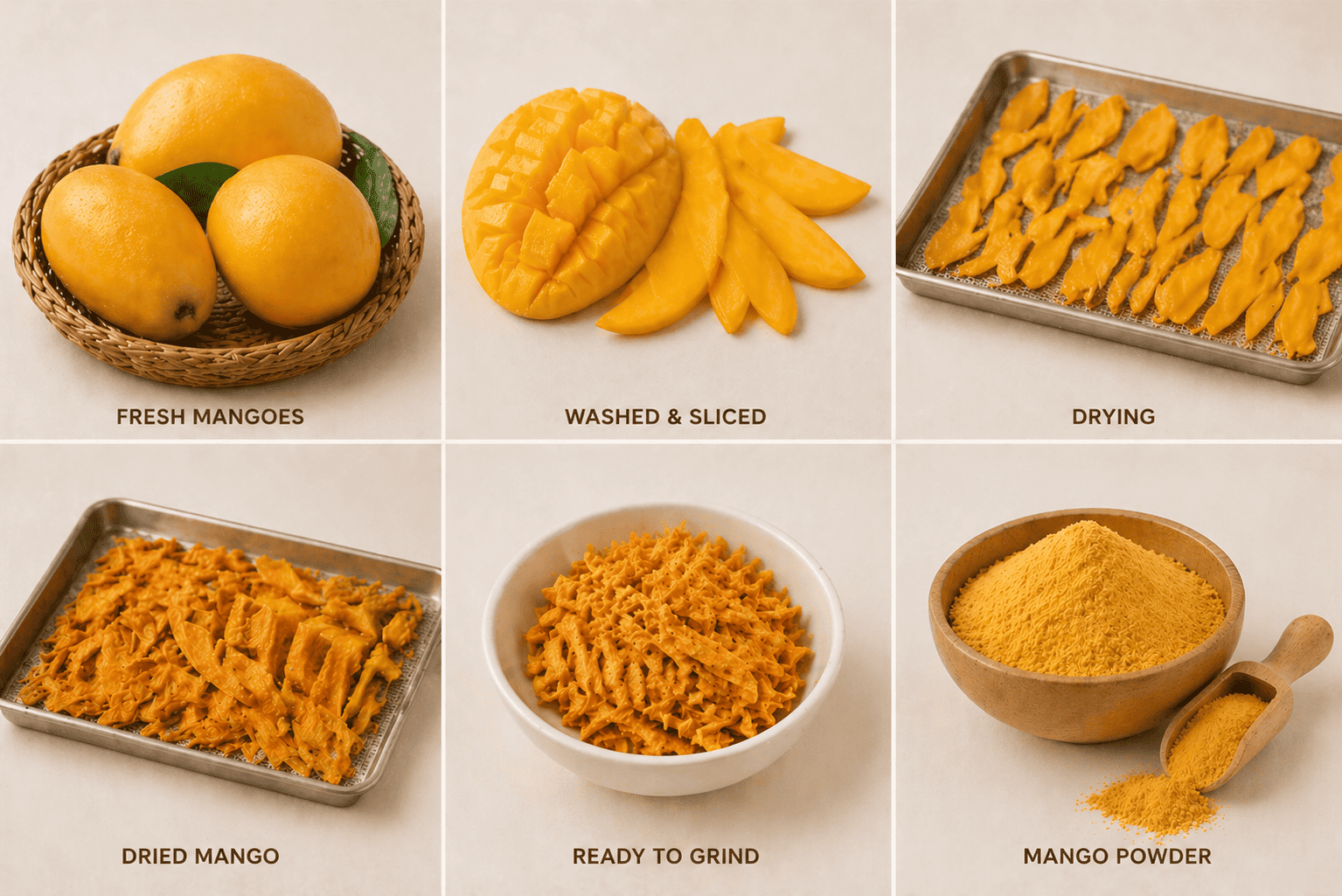
- Washing and sorting of raw mangoes
- Drying method (sun-dried vs mechanical)
- Grinding and sieving process
- Packaging system
Hygiene and Safety Checks
- Worker hygiene practices
- Pest control systems
- Waste management procedures
A professional setup increases buyer confidence significantly.
Step 3: Quality Control Systems
A reliable supplier must have strong quality control procedures.
Internal Quality Checks
- Batch testing for every production cycle
- Moisture content monitoring (≤10%)
- Color and texture consistency
Laboratory Testing
Buyers may request:
- Third-party lab reports
- Microbial testing results
- Heavy metal analysis
Documentation
- Quality control reports
- Batch records
- Testing certificates
Step 4: Certification Verification
Certifications are essential for international approval.
Mandatory Certifications
- HACCP (Food Safety System)
- ISO 22000
- Food safety compliance for target markets
Additional Certifications
- Halal certification (Middle East)
- Organic certification (if applicable)
- Kosher certification
Verification Process
Buyers:
- Check certificate validity
- Verify issuing authority
- Confirm audit dates
Fake or expired certificates are a major red flag.
Step 5: Traceability System Check
Traceability is critical in modern food supply chains.
What Traceability Means
The ability to track product from:
- Raw mango sourcing
- Processing batch
- Final shipment
What Buyers Expect
- Batch coding system
- Raw material sourcing records
- Production logs
- Packaging traceability
This ensures accountability in case of quality issues.
Step 6: Sample Testing and Validation
Even after audits, product testing is mandatory.
Sample Evaluation Criteria
- Color (natural yellow-brown)
- Aroma (fresh and sour)
- Texture (fine and uniform)
- Taste (balanced acidity)
Lab Testing Parameters
- Moisture level
- Microbial safety
- Adulteration check
Buyers compare multiple suppliers before final selection.
Step 7: Supply Chain and Capacity Evaluation
Buyers assess whether the supplier can handle long-term demand.
Key Factors
- Monthly production capacity
- Raw material availability
- Storage facilities
- Backup supply systems
Why It Matters
A supplier may pass quality checks but fail to meet volume requirements.
Step 8: Packaging and Logistics Audit
Packaging quality directly affects product safety.
Packaging Checks
- Food-grade materials
- Moisture-proof sealing
- Proper labeling (batch, expiry, origin)
Logistics Capability
- Experience with export documentation
- Shipping coordination
- On-time delivery record
Step 9: Trial Order Before Full Contract
Most importers do not directly place large orders.
Trial Order Purpose
- Verify actual shipment quality
- Test supplier reliability
- Evaluate logistics performance
Typical trial order:
- 500 kg – 2 tons
Only after successful delivery do buyers proceed to long-term contracts.
Key Audit Checklist Summary
Buyers typically evaluate suppliers based on:
- Factory hygiene and infrastructure
- Quality control systems
- Certifications and compliance
- Traceability systems
- Sample quality
- Production capacity
- Packaging and logistics capability
Common Mistakes Buyers Should Avoid
- Skipping Factory Audit
Leads to unexpected quality issues.
- Trusting Documents Without Verification
Fake certifications are common in global trade.
- Ignoring Traceability
Creates risk in case of product recalls.
- Not Testing Samples Properly
Leads to mismatch between sample and shipment.
How Suppliers Can Prepare for Audits
To pass international audits, suppliers should:
- Maintain clean and organized facilities
- Keep certifications updated
- Implement strong quality control systems
- Ensure full traceability documentation
- Train staff on hygiene and safety standards
Professional preparation increases chances of approval.
Conclusion
Evaluating and auditing a dry mango powder supplier is a critical step in international procurement. Buyers must go beyond price and focus on factory conditions, certifications, traceability, and quality systems.
A structured audit process reduces risk and ensures long term supply reliability. Suppliers who meet these standards can build strong global partnerships and secure consistent export growth.
FAQs
- Why is supplier auditing important?
It ensures product quality, safety, and reliability before bulk purchasing.
- What is the most important audit factor?
Factory hygiene and quality control systems are the most critical.
- How do buyers verify certifications?
By checking issuing authorities and validity dates.
- What is traceability in food export?
Tracking product from raw material to final shipment.
- Do buyers always conduct factory audits?
Yes, especially for long-term or high volume contracts.
- What is a trial order?
A small shipment used to test supplier performance.
- How can suppliers improve audit success?
By maintaining compliance, documentation, and consistent quality systems.